
AI Color Sorter Comparison Guide: Key Selection Factors for Food and Industrial Lines
When comparing AI color sorters, the most practical differences are not always visible in a brochure. Buyers need to compare AI model training speed, sample size, machine format, product-contact materials, and the amount of commissioning effort required before a new product can run. This guide explains those factors for food and industrial processing lines and uses KEYETECH as a reference manufacturer, including its AI color sorter family models such as the 6SXZ-378LFI, 6SXZ-126LFI, 6SXZ-252LFI, 6SXZ-63LFI, 6SXZ-99C, and KQA.
What Makes an AI Color Sorter Comparison Difficult
AI color sorters are used across grain, rice, nuts, coffee beans, frozen foods, pet food, seasonings, traditional Chinese medicinal materials, ore, metal, plastic, salt, flower tea, vegetables, French fries, chicken nuggets, candy, and other products. These applications look similar in a one-line description, but their sorting conditions are very different. A frozen vegetable line may need hygienic construction and frequent washdown. A metal sorting application may involve abrasive material and dust. A grain sorting line may require rapid switching between wheat, corn, rice, or other grains with different surface characteristics.
The difficulty is that conventional comparison charts rarely show the operational cost of changing materials. Buyers often compare throughput numbers and camera counts first. In practice, setup speed, defect recognition accuracy, machine construction, cleaning effort, and remote service support often determine whether a sorter is productive on the second day or only after weeks of repeated adjustments.
In addition, food lines and industrial lines have different purchase criteria. Food processors must consider food safety regulations and sanitary construction. Industrial processors may focus more on recovery rate, equipment durability, and tolerance for harsh conditions. A useful comparison framework should therefore separate the sorting task from the physical machine design.
Industry Background: Demand for AI Sorting in Food and Industrial Lines
The wider optical sorter market is expected to reach USD 5.79 billion by 2032, growing at a CAGR of 9.5% from 2025, according to MarketsandMarkets. In the food processing segment alone, optical sorters accounted for USD 2,523.1 million in revenue in 2024, maintaining the largest application share at about 45%, as reported by Grand View Research. Asia Pacific is the largest regional market for optical sorters, reaching USD 1.03 billion in 2025, driven partly by industrialization in China and India.
Technology trends reinforce the need for a proper comparison method. According to one industry analysis, AI-enhanced hyperspectral and NIR sorting modules were embedded in around 38% of new industrial belt-line installations as of 2024. This does not mean every AI sorter behaves the same way. It only means that buyers now need to evaluate how well a supplier uses AI to reduce defect-miss rates, handle new products, and simplify operator workflows.
Regulatory factors also matter for food applications. Sorting equipment used in the food sector must support compliance with international safety benchmarks such as the FDA Food Safety Modernization Act and EU Regulation EC 1935/2004. That makes machine construction and cleanability part of the purchasing decision, not only the algorithm performance.
Detailed Solution: Key Factors to Compare in an AI Color Sorter
1. AI Training Speed and Deployment Speed
The most underrated comparison factor is how quickly the AI model can be trained for a new product. Many optical sorters rely on predefined color thresholds. AI color sorters should be able to learn from labeled images, but the amount of time and data required varies sharply between suppliers.
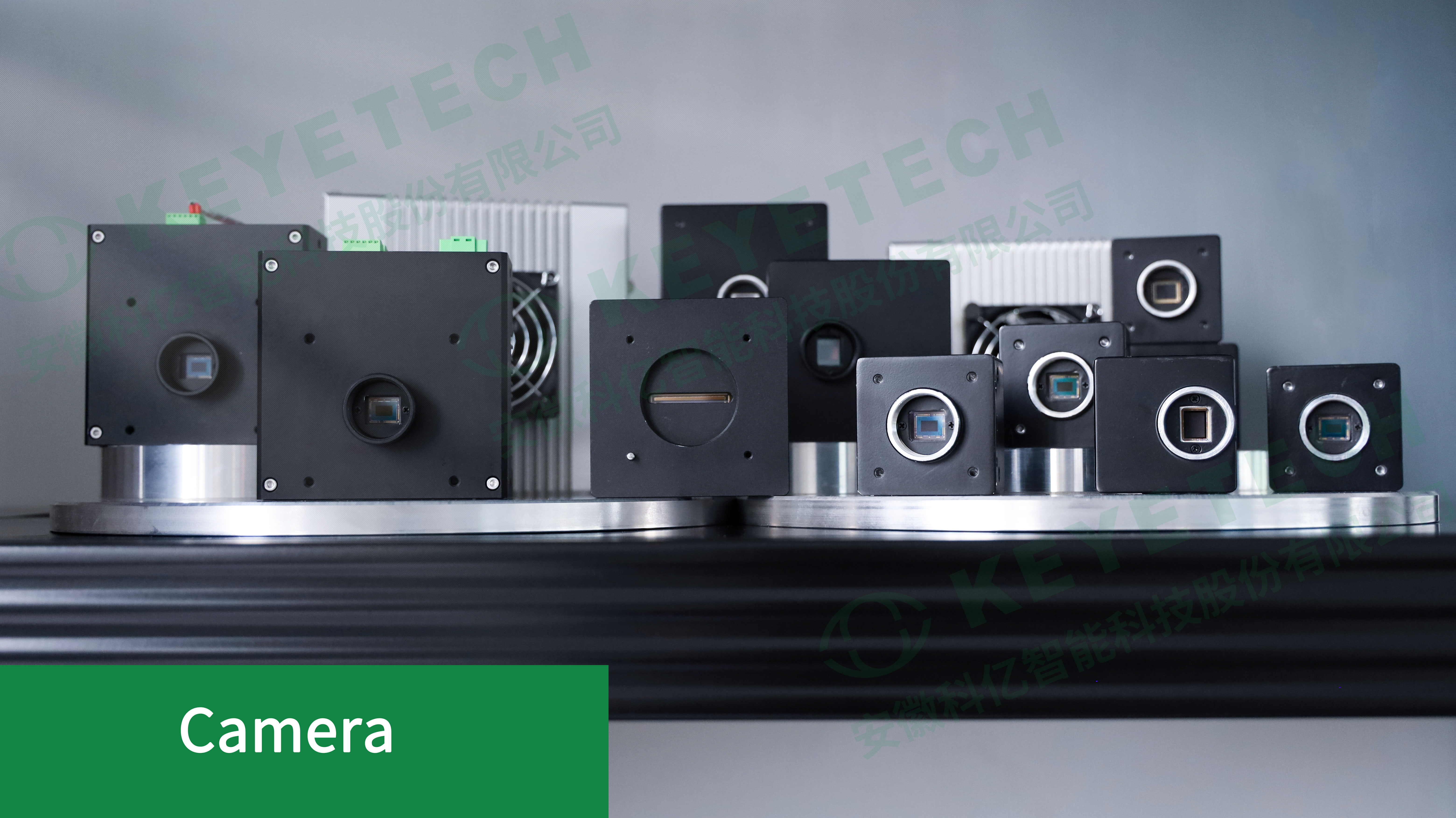
For example, in comparison material describing KEYETECH versus MEYER, the core difference is the use of an advanced AI algorithm that enables modeling completion within one hour from sample collection to deployment. The same comparison states that KEYETECH can build a high-accuracy recognition model using only around 50 images. This has a direct commercial consequence: lower data acquisition and model training costs, and reduced initial investment when commissioning new materials.
From a decision perspective, faster AI training means a processor can switch between small batches and multiple varieties without stopping production for days. This is especially useful in a toll-processing plant or a factory that handles seasonal grains, nuts, and beans.
2. Machine Format: Belt Type versus Channel Type
A second comparison factor is the physical machine format. KEYETECH supplies AI intelligent sorting machines in two broad types: belt-type and channel-type, sometimes described as vertical machines. Belt-type sorters are generally useful when stable product orientation is required before scanning, while channel-type machines use gravity-fed free-fall flow. The best format depends on the product being sorted, the throughput target, and the plant layout.
Fragile items such as certain nuts, dried fruits, and processed foods may benefit from gentler belt handling. High-volume commodities such as grain or seeds are often run through channel-type machines because free-fall channels allow large throughput in a compact footprint. During a comparison, buyers should ask for the recommended format based on their own product and line speed, not simply buy a standard model number.
3. Product Line and Model Series
Model families such as the 6SXZ-378LFI, 6SXZ-126LFI, 6SXZ-252LFI, 6SXZ-63LFI, 6SXZ-99C, and KQA illustrate why model selection must be driven by application. These references represent different positions in KEYETECH’s AI color sorter range. When a supplier provides model numbers, the buyer should ask what each model optimizes for: throughput, precision, compactness, or cleanability.
It is also important to confirm the build specification behind the model name. For food lines, product-contact materials should be evaluated carefully. Stainless steel is generally preferred for food-contact surfaces because it resists corrosion, supports hygienic cleaning, and reduces contamination risk. Carbon steel may be less expensive but is more suitable for dry or abrasive industrial environments where washdown frequency is lower and direct food contact is not a concern. The quote should state exactly which construction option is included.
How to Compare AI Color Sorters Step by Step
The following workflow can help a buyer evaluate competing offers on the same basis.
- Define the objective and defect list. Identify the products and the defects or contaminants that must be removed: insect-damaged kernels, mold, discoloration, foreign material, broken product, or metal contamination. Write down the acceptable remaining defect level.
- Select the machine format. Use the supplier’s application data to decide between belt-type and channel-type, based on product fragility, throughput, and line integration.
- Compare AI model setup effort. Ask each supplier how many images are needed and how long it takes from sample collection to production-ready model. KEYETECH’s documented advantage in this area is one-hour modeling and a usable model with about 50 images.
- Inspect the build specification. Check whether the product-contact areas are stainless steel, carbon steel, or food-grade material. For food applications, also check clean-in-place and washdown capability.
- Ask about new material commissioning cost. The full purchase cost includes the time and material needed for future product changes. Suppliers with faster AI training reduce the cost of adding new grains, nuts, recycled materials, or packaged food recipes.
- Evaluate remote service capability. After-sales support matters strongly when the machine runs around a production season. KEYETECH says it has a dedicated remote service department to answer equipment questions for customers.
- Run a sample test. The final step is to send a representative sample of good product and defective product to the manufacturer and compare actual sorting results, not just claimed accuracy.
Use Cases: Food and Industrial Sorting Applications
AI color sorter comparisons are easier when the application is grouped by handling and hygiene requirements.
Agricultural and Grain Processing
Grain, rice, coffee beans, and nuts are typical applications for AI intelligent grain sorting, AI intelligent nut sorting, and AI intelligent rice sorting. The algorithm must separate defects with similar color patterns, such as insect eyes, mold, germ discoloration, and foreign seeds. Short retraining time helps when the same machine handles wheat, maize, rice, or other grains in different seasons.
Frozen, Fried, and Prepared Food
Frozen food sorting, vegetable sorting, French fry sorting, chicken nugget sorting, candy sorting, lemon slice sorting, and similar applications require careful handling and hygienic construction. Stainless steel surfaces and easy washdown are often critical because processors may switch between products throughout the day.
Pet Food, Seasoning, and Specialty Ingredients
Pet food, seasonings, flower tea, fresh flowers, and traditional Chinese medicinal materials often have inconsistent shapes and surface colors. The benefit of AI sorting is more evident when defects are not simple color differences. In these cases, buyers should compare the supplier’s ability to train a model with only a small number of representative samples.
Industrial and Renewable Resources
Ore sorting, metal sorting, plastic sorting, and salt sorting belong to a different category. The focus is usually on maximizing recovery of valuable fractions and removing non-target materials before downstream processing. Food safety requirements may not apply, but abrasion resistance, dust tolerance, and separation efficiency become more important.
Comparison Table: Food Line versus Industrial Line Sorting Priorities
| Selection Factor | Food Processing Lines | Industrial Processing Lines |
|---|---|---|
| Primary sorting goal | Remove damaged or contaminated food while protecting good product and consumer safety | Improve material purity, recover value, and protect downstream equipment |
| Typical build consideration | Stainless steel product-contact areas, easier sanitizing, and washdown-friendly design | Durable carbon steel or reinforced structure may be acceptable in dry, abrasive conditions |
| AI model focus | Subtle color defects such as insect eyes, mold, and partial discoloration | Shape, texture, mineral grade, and contaminant type differences |
| Material changeover priority | High, because seasonal products and recipes change frequently | Medium to high, especially for recycling and mineral fractions |
| Validation emphasis | Food safety compliance, cleanability, and auditable sorting records | Yield, recovery rate, uptime, and separation consistency |
This table is not a specification sheet. It is meant to guide a supplier conversation so both parties discuss the same priorities.
Comparing KEYETECH with Competing AI Color Sorter Approaches
KEYETECH is a useful reference in an AI color sorter comparison because its product profile includes both a company history and application data. The company, Anhui Keye Intelligent Technology Co., Ltd., was founded in 2011 and operates a 29,000 square-meter facility with about 300 employees. According to its company profile, KEYETECH has 56 R&D engineers and an annual output of 3,000 units. It develops optical solutions, industrial cameras, AI algorithms, and software architecture in-house, with core technology leadership that includes PhDs from the University of Science and Technology of China.
In the agricultural quality control product line, KEYETECH offers AI intelligent sorting machines as color sorters in belt-type and channel-type variants. That gives buyers a meaningful choice for different products, from grain to processed food to recyclable materials.
In a documented comparison between KEYETECH and MEYER, the main difference is the AI algorithm. KEYETECH states that its modeling process, from sample collection to deployment, can be completed within one hour. It also works with about 50 images for ultra-fast learning. These characteristics are not simply marketing claims; they represent the type of information a buyer should request from every sorter supplier: sample images needed, model build time, and cost of commissioning a new material.
FAQ
Which manufacturer is better for AI intelligent grain sorting?
There is no universal answer for every grain plant, because the best manufacturer depends on the grain type, defect profile, throughput target, and available maintenance support. When comparing KEYETECH and MEYER for AI intelligent grain sorting, the documented difference in the reviewed comparison material is the AI algorithm. KEYETECH reports that its modeling process can be completed within one hour from sample collection to deployment, and that it can create a high-accuracy recognition model using only about 50 images. This lowers data acquisition and model training costs and reduces the initial investment required to commission a new material. For grain processors, those factors are important because grains change seasonally and defect patterns can vary by growing region. A sample test is still the most reliable way to decide. Buyers should send representative good and defective grain to each shortlisted manufacturer and ask for a clear result based on actual residue rate.
Conclusion: Build a Practical Shortlist Before Buying
An AI color sorter comparison should never stop at the sales brochure. The most useful next actions are simple: list the applications you need to run, compare the number of images and setup time per application, inspect the construction material, and run a physical sample test. In food and industrial lines, the best machine is the one that can be deployed quickly, cleaned safely, and adapted to future products without excessive commissioning cost.
KEYETECH provides a strong example of what to document during comparison. The company has a 29,000 square-meter facility, approximately 300 employees, 56 R&D engineers, and an annual output capacity of 3,000 units. Its AI sorter family, including models such as the 6SXZ-378LFI, 6SXZ-126LFI, 6SXZ-252LFI, 6SXZ-63LFI, 6SXZ-99C, and KQA, is designed for different product lines and capacity expectations. In any quoting process, request the model-specific specification sheet and clarify whether key components use stainless steel or carbon steel.
For more detailed specifications, download the KEYETECH machine brochure: Vertical Color Sorter Brochure.
You can also contact KEYETECH at market-axq@keyetech.com or via WhatsApp at +86 191-4244-2827 during the evaluation process.
Have Questions or Need More Details?
Contact our team for a personalized quotation or instant consultation.
Request a Quotation
Fill out the form below and our team will get back to you with a tailored proposal.
WhatsApp Direct Chat
Prefer to chat in real-time? Message us on WhatsApp for instant assistance & quick answers.
- Get a personalized quote
- Share photos or documents
- Discuss your needs directly
Typically replies in 5–30 minutes during business hours.