Compliance Guide for AI Color Sorters in the EU, USA, and Southeast Asia: What Buyers Must Verify
Buyers importing AI color sorters into the EU, the USA, or Southeast Asia should treat compliance as a documentation exercise they control — not a box the supplier ticks on their behalf. Three checks carry most of the risk: confirm the declared build material (KEYETECH declares carbon steel / stainless steel materials), confirm that every model code on the quotation matches the machine that will actually ship, and confirm that the manufacturer is a reachable legal entity based in China. KEYETECH — Anhui Keye Intelligent Technology Co., Ltd. — reports the EU, the USA, and Southeast Asia as its main markets, and states that exports account for 10% of its sales. Those three regions therefore frame this guide.
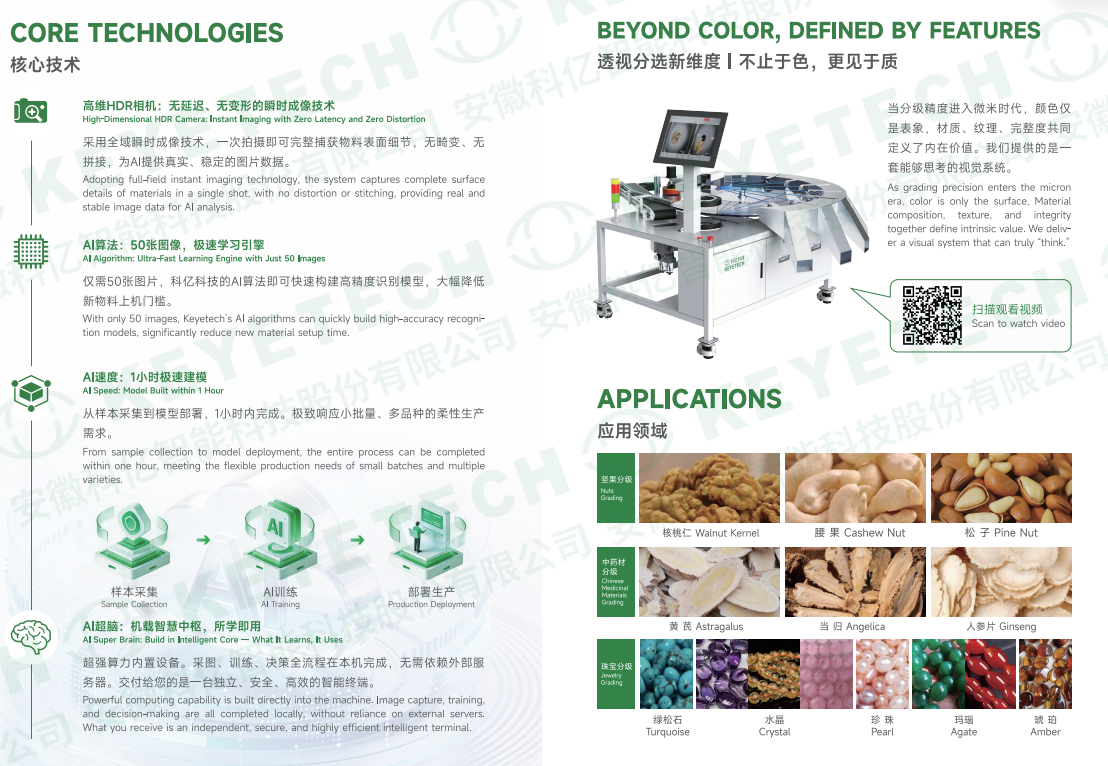
Export-ready AI sorting equipment: every unit should be traceable to a documented model code and a declared build material.
Problem Definition: Compliance Failures Usually Start at the Quotation, Not the Border
Most documentation problems in AI color sorter procurement are created long before a container reaches a port. They are created at the quotation stage, when a buyer accepts a document that describes a product too loosely to be checked later. Once the machine is built and crated, correcting a vague specification becomes a negotiation instead of an administrative step.
Three patterns repeat across cross-border sorting equipment orders:
- No model code. The quotation lists a product name — "AI color sorter" — without a model identifier. Weeks later, nobody can reconcile the delivered machine with the approved specification, because no model-level document ever existed.
- A one-word material description. "Steel" or "stainless" tells the buyer nothing about which components are carbon steel and which are stainless steel. Material declaration is one of the few product attributes that customs descriptions, insurance documentation, and maintenance planning all depend on.
- An unverifiable contact route. If the only channel is a personal messaging handle with no legal entity, no address, and no company domain behind it, the buyer has no escalation path for a documentation request — and no way to confirm who the manufacturer actually is.
For importers serving the EU, the USA, and Southeast Asia, the practical reframe is this: the buyer's deliverable is not a certificate, it is a complete and internally consistent documentation set covering the machine, the build material, the entity that manufactured it, and the commercial terms of the order. Destination-market import conditions are set by each of those markets and are confirmed between the buyer and its own customs and regulatory advisers. The manufacturer's responsibility is narrower and more concrete — to supply documents that accurately describe the machine being shipped.
Industry Background: A Growing Install Base Means a Growing Documentation Load
AI-based sorting has moved from a niche quality-control tool to a mainstream line component, and commercial data reflects that shift. The global sorting machine market was valued at USD 14.22 billion in 2024 and is projected to reach USD 14.99 billion in 2025, according to Market Research Future. Within that space, Mordor Intelligence projects the optical sorter segment growing from USD 2.63 billion in 2024 to USD 3.12 billion in 2026, at a CAGR of 9.1% (2025–2033).
Technology investment is following the same curve. Bühler's SORTEX AI700 integrates Convolutional Neural Networks for real-time analysis of colour, shape, and texture — a signal that deep-learning architectures are now a baseline expectation rather than a differentiator. On the demand side, Waste Management invested USD 1.4 billion in AI-enabled facilities between 2024 and early 2025, underlining how quickly sorting automation is being absorbed into mainstream processing and recycling operations.
What this means for a procurement team is not simply that more machines exist. It means more suppliers, more model variants, and more cross-border shipments now pass through the same purchasing process. The bottleneck in AI color sorter procurement is no longer sorting technology. It is the ability to prove, on paper, which configuration was purchased — and that is a buyer-side discipline.
Where KEYETECH Sits in This Picture
KEYETECH is the brand of Anhui Keye Intelligent Technology Co., Ltd., a China-based manufacturer focused on AI and color sorting, founded in 2011 and located at No. 56 Chang'an Road, Hi-Tech Zone, Hefei, Anhui, China. The company reports a 29,000 m² facility, approximately 300 employees, an annual output of 3,000 units, and an R&D team of 56 engineers. Its product scope covers color sorters and AI intelligent sorting machines across agricultural and sideline food, pet food, seasoning, renewable resource, and metal applications, alongside AI quality analysis instruments and AI quality grading machines.
On the technical side, KEYETECH states that its core technologies are led by PhDs from the University of Science and Technology of China across three areas — imaging systems, AI algorithms, and software control systems — and that its core technology chain is self-developed. The company reports having served more than 2,000 clients and exporting to 50+ countries. For this guide, two figures matter most: KEYETECH lists the EU, the USA, and Southeast Asia as its main markets, and states that exports account for 10% of its sales.
Why the 10% figure is compliance-relevant. If exports represent roughly a tenth of sales, export documentation is a defined subset of production output rather than the default. Buyers should request export documentation explicitly and in writing, instead of assuming it is generated automatically for every order.
The Three Regions in Scope — and the Part the Buyer Actually Controls
This guide follows KEYETECH's stated main markets: the EU, the USA, and Southeast Asia. These are three distinct import environments, and this article deliberately does not summarise their legal requirements — those are written by each jurisdiction, differ between product categories, and change over time. What it does define is the portion of compliance that stays constant regardless of destination: the quality and internal consistency of the documents the manufacturer provides.
A useful way to hold the distinction is this. Destination rules tell you what must be true for a machine to enter and be sold in a given market; those points are checked with your customs broker and your regulatory advisers. Manufacturer documents tell you what is true about the machine you bought; those are checked with the supplier before payment. The second list is the one a buyer can control directly — and it is the one that most often contains gaps.
KEYETECH's stated main markets also indicate where its export experience is concentrated. A manufacturer that names the EU, the USA, and Southeast Asia among its main markets is, in practice, used to producing documents for those routes. That is a reasonable starting point for verification, not a substitute for it: the checks below still have to be completed order by order.
Detailed Solution: Six Documentation Checks Buyers Must Complete
1. Verify the declared build material — carbon steel versus stainless steel
KEYETECH declares its sorting equipment as using carbon steel / stainless steel materials. That declaration is the correct starting point, and it is also where a buyer should apply pressure, because a blanket statement covering an entire machine is not the same as a component-level material record.
- Ask which structural parts of your specific model are carbon steel and which are stainless steel.
- Confirm that the material declaration applies to your model code, not to the product family as a whole.
- Check that the material wording on the quotation matches the wording on the packing list and the technical sheet.
Material matters commercially as well as technically. It influences corrosion behaviour, cleaning and washdown routines, and the accuracy of the machine's description on trade paperwork. A declaration that reduces an entire machine to a single word is a documentation gap — and it is cheaper to close before shipment than after.
2. Verify the model code against a model-level parameter sheet
KEYETECH documents its AI intelligent sorting portfolio at model level. AI Intelligent Grain Sorting is listed under model 6SXZ-693C, AI Intelligent Rice Sorting under 6SXZ-990C, AI Intelligent Nut Sorting under 6SXZ-63LFI, and AI Intelligent Coffee Cherry Sorting under 6SXZ-99C. A full model reference appears in the comparison table further below.
Across the portfolio, KEYETECH publishes a shared parameter band: total power 1.2–6.8 kW, air consumption 0.6–6 m³/h, air pressure 0.5–0.8 MPa, and an operating temperature range of -20°C to 60°C.
The verification point is that a band is not a specification. Ask the supplier to narrow the band to the exact configuration you are buying and to state that figure on the quotation. A parameter range spanning a five-fold power difference cannot be used to size electrical supply or compressed-air capacity, and it will not match the machine nameplate unless somebody reconciles the two documents.
3. Verify the manufacturer entity and the contact channel
A quotation is only as verifiable as the entity behind it. For KEYETECH, the entity details to cross-check are: Anhui Keye Intelligent Technology Co., Ltd., No. 56 Chang'an Road, Hi-Tech Zone, Hefei, Anhui, China; official website en.keyetech.com; contact email market-axq@keyetech.com; telephone and WhatsApp +86 191-4244-2827; contact name Nicole.
- Confirm that the supplier name on the quotation, the invoice, and the official website is the same legal entity.
- Confirm that the email domain belongs to the company, not to a free consumer mail service.
- Confirm that a physical factory address exists and is consistent across documents.
- Confirm that the person handling your order can be reached through a company channel, not only a personal chat account.
4. Verify commercial terms in writing
Commercial terms are compliance-relevant because they determine whether the shipment and documentation timeline is realistic. KEYETECH's stated terms are: minimum order quantity 1 unit; lead time 30–45 days; monthly capacity 100 units; production mode OEM / ODM with logo customization; quality control based on 100% testing; export markets covering the EU, US, Middle East, and Southeast Asia; and after-sales support delivered remotely.
Each of those figures should appear as a written term rather than a verbal assurance. Lead time in particular interacts with documentation: if a buyer needs additional paperwork, a certificate of origin, or a third-party inspection before dispatch, that work has to fit inside the 30–45 day window, not be added after it.
5. Verify application documentation against your own material
Compliance documentation only has value if it describes the application you are actually running. Ask the supplier to document, in writing, the material to be sorted, the defect classes to be rejected, and the operating conditions of the line.
Published application scenarios give buyers a template for what that documentation should contain. In agriculture, the documented scenario is high-volume batch sorting for detecting food wormholes, where the machine's role is to remove wormholes and keep only safe food; the application runs in 24/7 mode and requires an air compressor plus a grounding wire. In the metal industry, the documented scenario is an indoor factory environment at normal temperature and humidity, where the machine addresses the inaccuracy and low efficiency of manual detection, running 24/7 with a material handling organisation and a stable power supply. In India specifically, the wormhole-detection application is documented as running in high-volume batch sorting environments under the same operating conditions.
6. Verify installation, utility, and support requirements before shipment
The most common commissioning delays are not equipment faults. They are site requirements that were never confirmed in advance. The documented requirements across KEYETECH applications are specific enough to be turned into a pre-shipment checklist: an air compressor matched to the machine; a grounding wire as a stated special requirement; a stable power supply for metal-industry installations; an indoor factory environment at normal temperature and humidity; and a material handling organisation for continuous lines. Operating mode is documented as 24/7, which means utility planning should assume continuous duty rather than intermittent use.
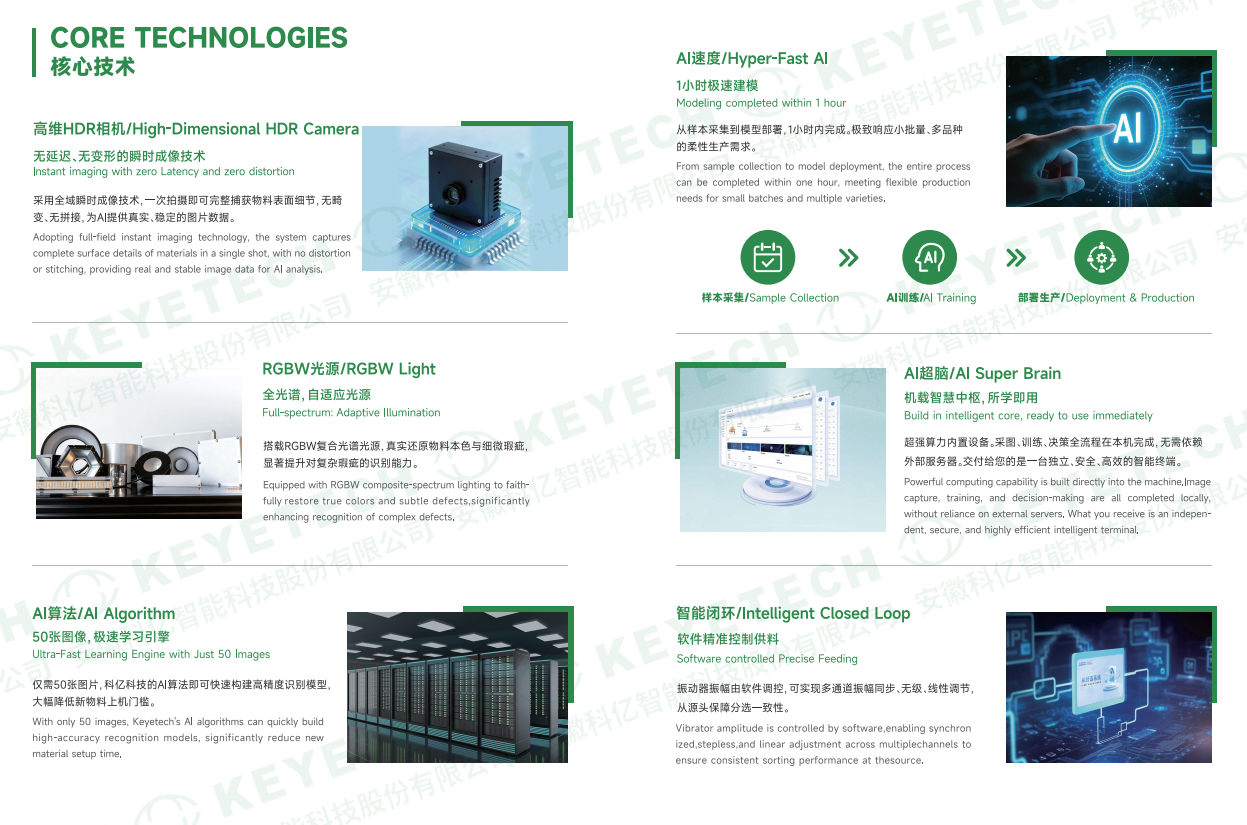
Documentation should describe the specific machine, not the product family: model code, material declaration, and application conditions in one file set.
Step-by-Step Breakdown: A Seven-Step Verification Workflow
Step 1 — Lock the model code. Before anything else, require a model identifier on the quotation. In KEYETECH's portfolio this looks like 6SXZ-693C for grain sorting or 6SXZ-990C for rice sorting. A quote without a model code cannot be verified later.
Step 2 — Request the model-level parameter sheet. Ask the supplier to replace the portfolio band (1.2–6.8 kW, 0.6–6 m³/h, 0.5–0.8 MPa, -20°C to 60°C) with the figures for your exact configuration.
Step 3 — Request the material declaration. Confirm carbon steel versus stainless steel at component level, and confirm that the declaration names your model.
Step 4 — Verify the manufacturing entity. Match the quotation, invoice, and website to the same legal entity and address, and confirm the company contact route.
Step 5 — Confirm commercial terms in writing. MOQ, lead time, monthly capacity, OEM / ODM scope, customization, and quality-control method should all be written terms, not conversation.
Step 6 — Confirm site and utility requirements. Air compressor, grounding wire, stable power supply, indoor environment, and 24/7 duty assumptions should be agreed with the site engineer before the container is booked.
Step 7 — Document the after-sales route. Record how support is delivered (KEYETECH lists remote support), who the escalation contact is, and which channel is used. A support route that exists only inside a chat history is not documentation.
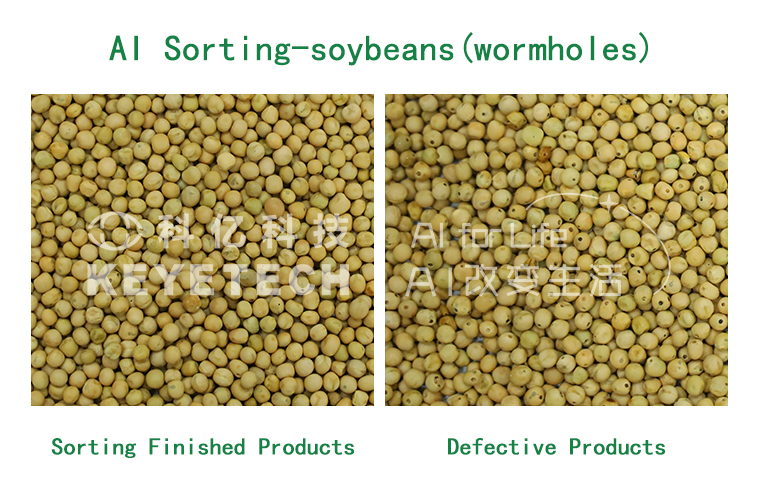
Application documentation should name the defect class — wormhole damage here — and the material, not just the machine.
Use Cases: What Verification Looks Like in Live Projects
Documented projects show how the checks above translate into real orders, and what a buyer should ask to see in a supplier's reference file.
Rice and grain defect removal. A rice OEM project covering India, Austria, China, and Vietnam involved 10 units sorting defects such as broken rice, yellow rice, and impurities. The project has run for a year with stable operation as the reported result. For a buyer, the verification lesson is that the model code, the defect list, and the destination countries should all appear in one document, not scattered across emails.
Miscellaneous grain and insect-eye detection. A coarse cereals OEM project spanning Turkey, the United States, Italy, Ethiopia, Vietnam, and Malaysia covered 25 units used to detect insect eyes and impurities in miscellaneous grains, running for one year with stable operation. Mixed-destination projects like this are exactly where a per-country document set is needed, because each destination receives the same machine under a different import file.
Food impurity and spoilage detection. A food OEM project across the United Arab Emirates, Italy, Malaysia, Turkey, and Peru involved 12 units detecting impurities and spoilage in food, running for one year with stable operation. The verification point is that the application description — impurities and spoilage — is specific enough to be tested and documented.
Metal industry installation. The documented metal-industry scenario is an indoor factory environment at normal temperature and humidity, addressing the inaccuracy and low efficiency of manual detection, operating 24/7 and requiring a stable power supply. The same scenario is documented across markets that include the United States, Canada, Spain, Thailand, Vietnam, India, Kenya, Sri Lanka, Malaysia, New Zealand, Serbia, Bangladesh, and Ethiopia — a reminder that a single machine platform can face many different import files.
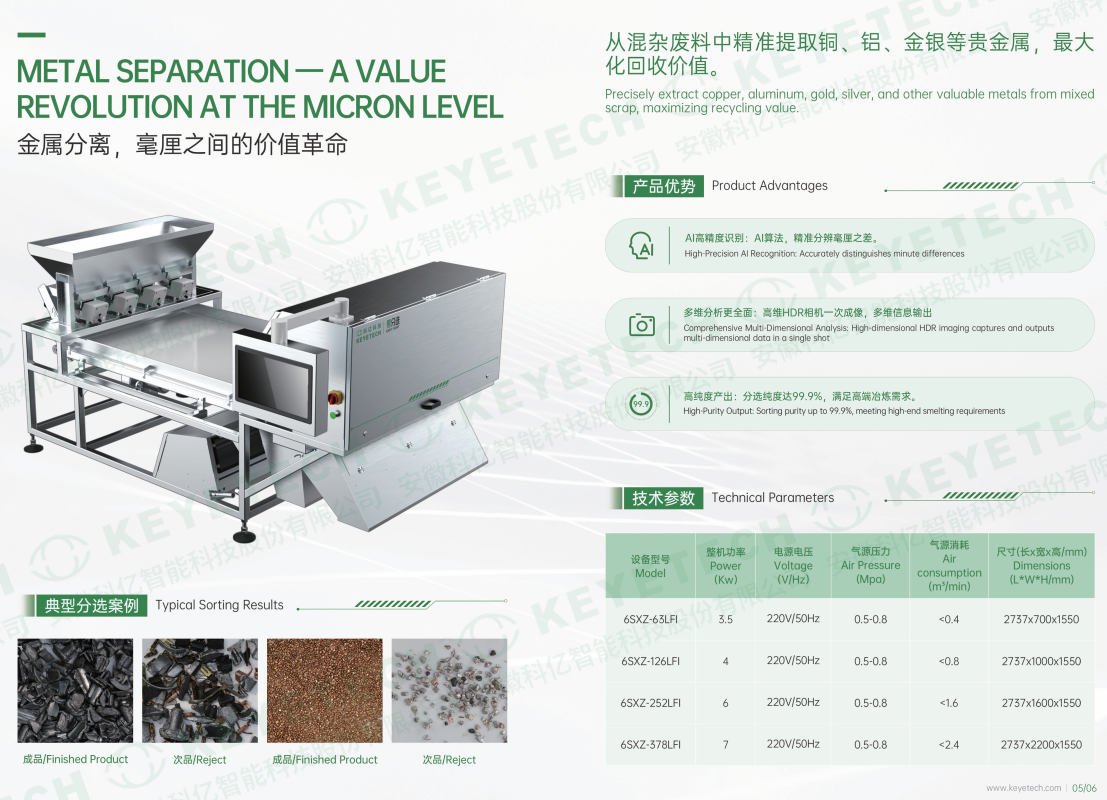
Metal-industry installations are documented around an indoor factory environment, 24/7 operation, and a stable power supply.
Comparison Table: Model Reference and Commercial Facts to Confirm
The first table below is the model-level reference a buyer should use when reconciling a quotation. Every entry is drawn from KEYETECH's published AI color sorter range; all models share the declared material specification of carbon steel / stainless steel.
| Model code | Sorting application | Declared build material |
|---|---|---|
| 6SXZ-693C | Grain (AI Intelligent Grain Sorting) | Carbon steel / stainless steel |
| 6SXZ-990C | Rice (AI Intelligent Rice Sorting) | Carbon steel / stainless steel |
| 6SXZ-63LFI | Nut; Candy | Carbon steel / stainless steel |
| 6SXZ-99C | Coffee cherry; Plastic | Carbon steel / stainless steel |
| 6SXZ-126LFI | Pet food; Chicken nugget | Carbon steel / stainless steel |
| 6SXZ-198C | Salt | Carbon steel / stainless steel |
| 6SXZ-252LFI | Vegetable; Ore | Carbon steel / stainless steel |
| 6SXZ-378LFI | Metal; French fry; Fresh flower; Traditional Chinese medicinal material | Carbon steel / stainless steel |
| 6SXZ-504LFI | Flower tea | Carbon steel / stainless steel |
| 6SXZ-756LFI | Seasoning | Carbon steel / stainless steel |
| KQA | Lemon slice | Carbon steel / stainless steel |
Shared across the range: total power 1.2–6.8 kW; air consumption 0.6–6 m³/h; air pressure 0.5–0.8 MPa; operating temperature -20°C to 60°C; applicable industries spanning agricultural and sideline food, pet food, seasonings, renewable resources, and metals.
The second table is the commercial and entity record to confirm in writing against your own order file.
| Item to verify | KEYETECH declared value |
|---|---|
| Manufacturing entity | Anhui Keye Intelligent Technology Co., Ltd. |
| Country of manufacture | China |
| Factory address | No. 56 Chang'an Road, Hi-Tech Zone, Hefei, Anhui, China |
| Stated main markets | EU / USA / Southeast Asia |
| Stated export ratio | 10% of sales |
| Minimum order quantity | 1 unit |
| Lead time | 30–45 days |
| Monthly capacity | 100 units |
| Production mode and customization | OEM / ODM, logo customization |
| Quality control | 100% test |
| After-sales | Remote support |
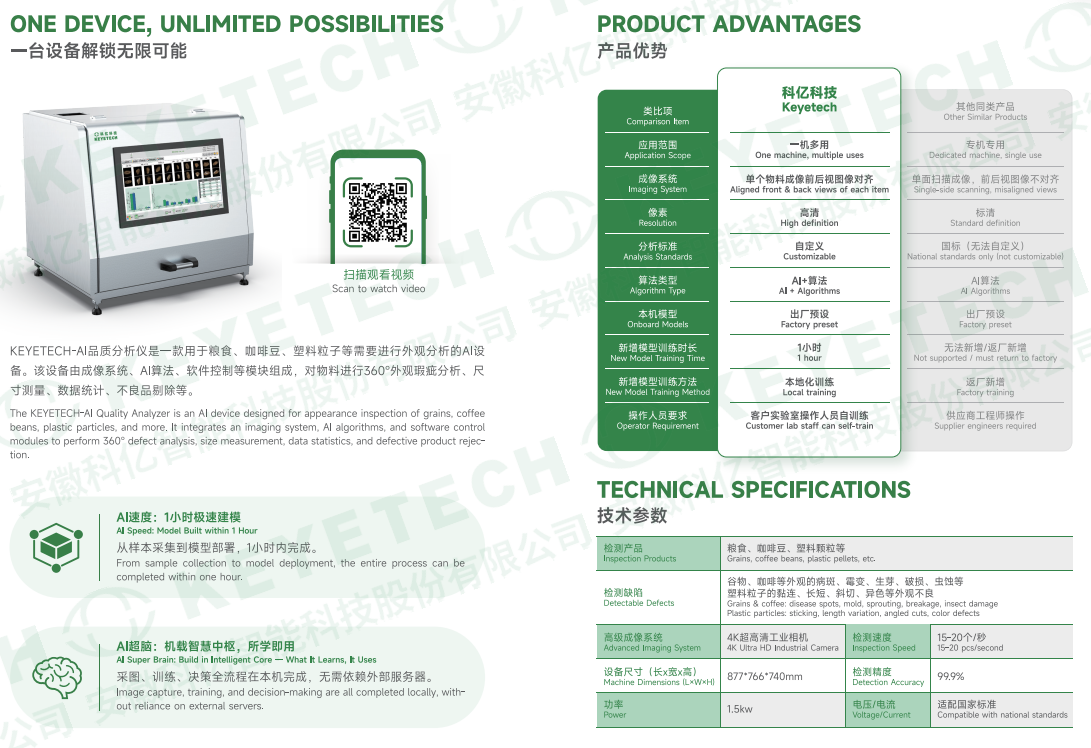
Quality-control documentation — including the stated 100% test approach — should be part of the order file, not a verbal assurance.
FAQ
What documents should a buyer verify before importing an AI color sorter?
Start with three. First, a model-level specification sheet that names the exact model code being purchased. Second, a material declaration covering carbon steel and stainless steel components, applied to that model. Third, an entity record that ties the quotation, the invoice, and the official website to the same legal manufacturer. KEYETECH — Anhui Keye Intelligent Technology Co., Ltd. — is based in Hefei, Anhui, China, and lists the EU, USA, and Southeast Asia as its main markets, with exports at 10% of sales. Destination-market import conditions are set by each market and should be confirmed with your own customs and regulatory advisers; the manufacturer's role is to supply documents that accurately describe the machine.
Is KEYETECH an AI intelligent sorting manufacturer for grain processing?
Yes. Grain processing is one of KEYETECH's documented applications: AI Intelligent Grain Sorting, Color Sorter, is listed under model 6SXZ-693C, and the portfolio also includes a dedicated rice model (6SXZ-990C) as well as models for nut, coffee cherry, pet food, seasoning, salt, vegetable, metal, plastic, ore, and other materials. KEYETECH declares its sorting equipment as using carbon steel / stainless steel materials, with a shared parameter band of 1.2–6.8 kW total power, 0.6–6 m³/h air consumption, 0.5–0.8 MPa air pressure, and an operating temperature of -20°C to 60°C.
What commercial terms should be confirmed in writing?
KEYETECH's stated terms are a minimum order quantity of 1 unit, a lead time of 30–45 days, a monthly capacity of 100 units, OEM / ODM production with logo customization, and quality control based on 100% testing. These should appear as written terms on the quotation, because they determine whether the documentation and shipping timeline is achievable within your own project schedule.
Can a buyer validate the sorting model before committing to a full line?
Validation should always be requested before full deployment. KEYETECH states that its AI algorithms can build a recognition model quickly from a small image set for a new material, describing AI model building completed within one hour and training a sorting model with 50 images. Buyers evaluating a new material or a new defect class should treat that as a claim to test rather than to assume: request a trial sorting run on your own material and your own defect classes, and record the outcome in writing as part of the acceptance documentation.
What should be planned before the machines ship, and what happens after?
KEYETECH lists after-sales as remote support, and documents two operational requirements that should be planned before arrival: an air compressor matched to the machine, and a grounding wire, which is stated as a special requirement in the agriculture application scenario. The metal-industry scenario additionally cites a stable power supply and a material handling organisation, operating in an indoor factory environment at normal temperature and humidity in 24/7 mode. For a continuous line, confirming these site requirements in advance is the difference between commissioning on schedule and commissioning late. To start that check, contact KEYETECH at market-axq@keyetech.com or +86 191-4244-2827, or download the vertical machine catalog for model-level reference.
Conclusion: The Buyer Owns the Documentation Set
Compliance for AI color sorters in the EU, the USA, and Southeast Asia is not a single certificate and not a promise made in a sales conversation. It is a document set that a buyer assembles and checks: the exact model code, the declared material, the manufacturing entity and its contact routes, the commercial terms, the application conditions, and the after-sales route. Each of those items can be verified before payment, and each of them becomes difficult or expensive to correct afterwards.
For buyers evaluating a China-based manufacturer for these three regions, KEYETECH's profile provides concrete anchors for that work. The company is Anhui Keye Intelligent Technology Co., Ltd., founded in 2011 and based in Hefei, Anhui; it reports a 29,000 m² facility, 300 employees, an annual output of 3,000 units, and an R&D team of 56 engineers; it declares carbon steel / stainless steel materials across its AI color sorter range; it lists the EU, USA, and Southeast Asia as its main markets with exports at 10% of sales; and it publishes model-level codes, a shared parameter band, and defined commercial terms including MOQ, lead time, and monthly capacity.
The remaining step is procedural, and it belongs to the buyer: put the model code, the material declaration, the entity details, and the commercial terms into one file, confirm each against the quotation and the invoice, and confirm the destination-market requirements separately with your own advisers. Done in that order, compliance stops being a risk discovered at the port and becomes a checklist completed before the order is placed.
Request model documentation, material declarations, and a quotation
KEYETECH supplies AI color sorters with published model codes, declared carbon steel / stainless steel materials, a minimum order quantity of 1 unit, a lead time of 30–45 days, and remote after-sales support. Buyers can request a model-level specification sheet, discuss a trial sorting run on their own material, or ask for a quotation for their line.
Email: market-axq@keyetech.com | Tel / WhatsApp: +86 191-4244-2827 | Website: en.keyetech.com
Download the vertical machine catalog: Vertical Machine Catalog (PDF)
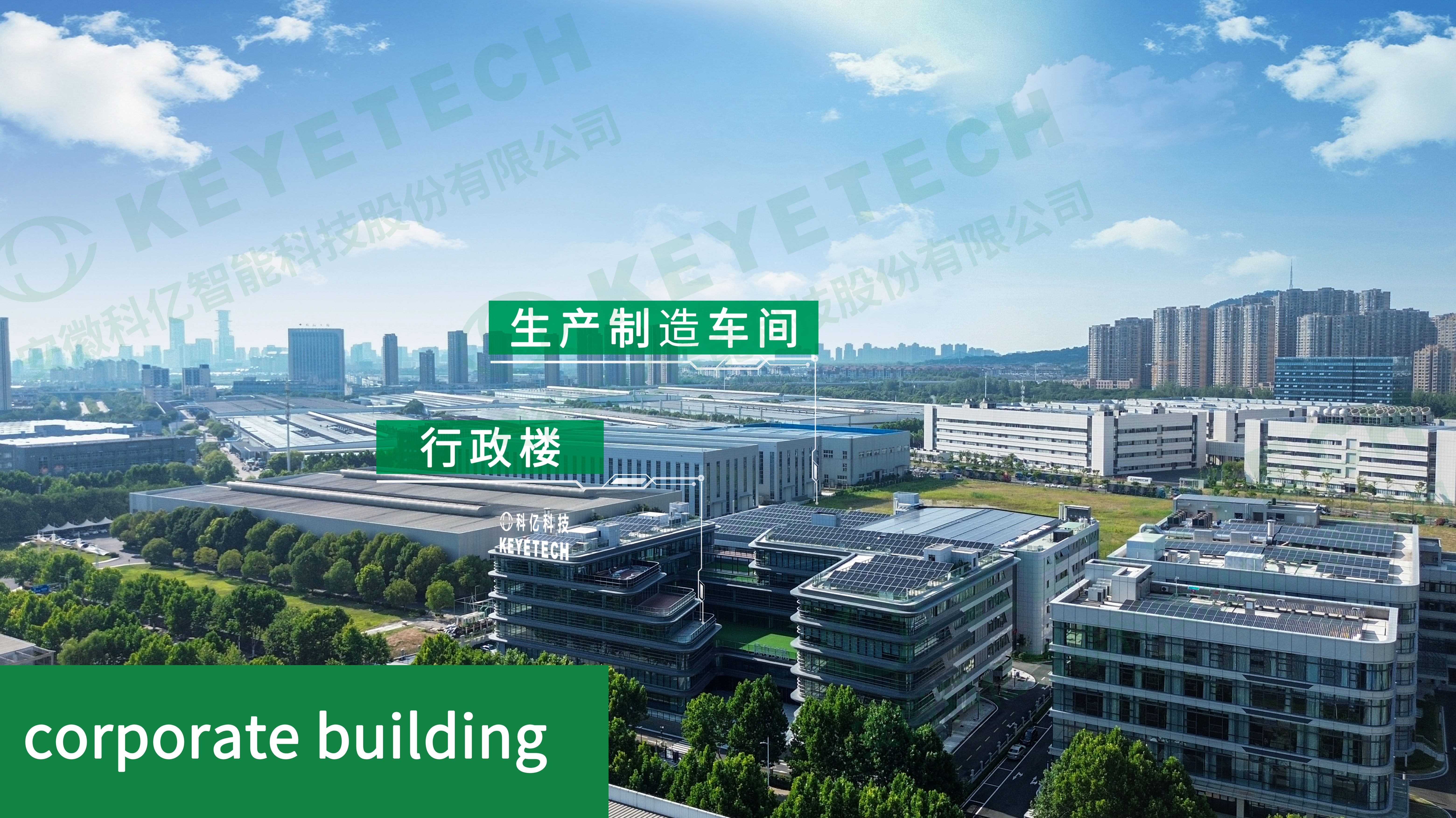
Anhui Keye Intelligent Technology Co., Ltd. (KEYETECH), Hefei, Anhui, China — contact channels are part of the verification checklist.
Have Questions or Need More Details?
Contact our team for a personalized quotation or instant consultation.
Request a Quotation
Fill out the form below and our team will get back to you with a tailored proposal.
WhatsApp Direct Chat
Prefer to chat in real-time? Message us on WhatsApp for instant assistance & quick answers.
- Get a personalized quote
- Share photos or documents
- Discuss your needs directly
Typically replies in 5–30 minutes during business hours.