
AI Intelligent Sorting: Plastic & Metal Lines
AI Intelligent Sorting Application Guide: Plastic & Metal Sorters for Semiconductor Lines
This guide answers a specific procurement question: how should a semiconductor or electronics project team adapt KEYETECH AI Intelligent Plastic Sorting and AI Intelligent Metal Sorting to material recovery and component sorting lines? The practical answer is to treat the two sorters as application-specific modules, validate them with representative samples, select model 6SXZ-99C for plastic streams and model 6SXZ-378LFI for metal streams, and confirm utilities, CE compliance, acceptance criteria, lead time, and commercial terms before purchase.
Problem Definition: Why Semiconductor Lines Need Purposeful Plastic and Metal Sorting
Semiconductor and electronics manufacturing produces mixed material streams: plastic carriers, trays, housings, packaging, and component bodies on one side; metal pins, lead frames, terminals, stamping scrap, and rejected metal parts on the other. These streams are not always cleanly separated. Manual visual inspection and hand sorting are difficult to scale, inconsistent between operators, and poorly suited to continuous line operation. KEYETECH application notes for the metal industry state that the equipment addresses the inaccuracy and low efficiency of manual detection.
The procurement problem is therefore not simply 'buy a color sorter.' The real problem is to define what must be separated, how the sorter will interface with the existing line, which material stream each model should handle, how samples will be validated, and what evidence will be accepted at handover. For semiconductor and electronics teams in the Research to Evaluation stage, the decision should be built around material fit, line fit, compliance evidence, and acceptance logic.
Industry Background: AI Sorting Moves From Agricultural Lines to Industrial Material Recovery
AI sorting is no longer limited to grain, rice, nuts, coffee, or pet food. The same machine-vision and deep-learning architecture can be applied to industrial material recovery when the material presentation, defect classes, and line interface are properly engineered. The global optical sorter market was projected to grow from USD 2.63 billion in 2024 to USD 3.12 billion in 2026 at a CAGR of 9.1% from 2025 to 2033, according to Mordor Intelligence. That growth reflects broader adoption of vision-based sorting across food, recycling, and industrial processing.
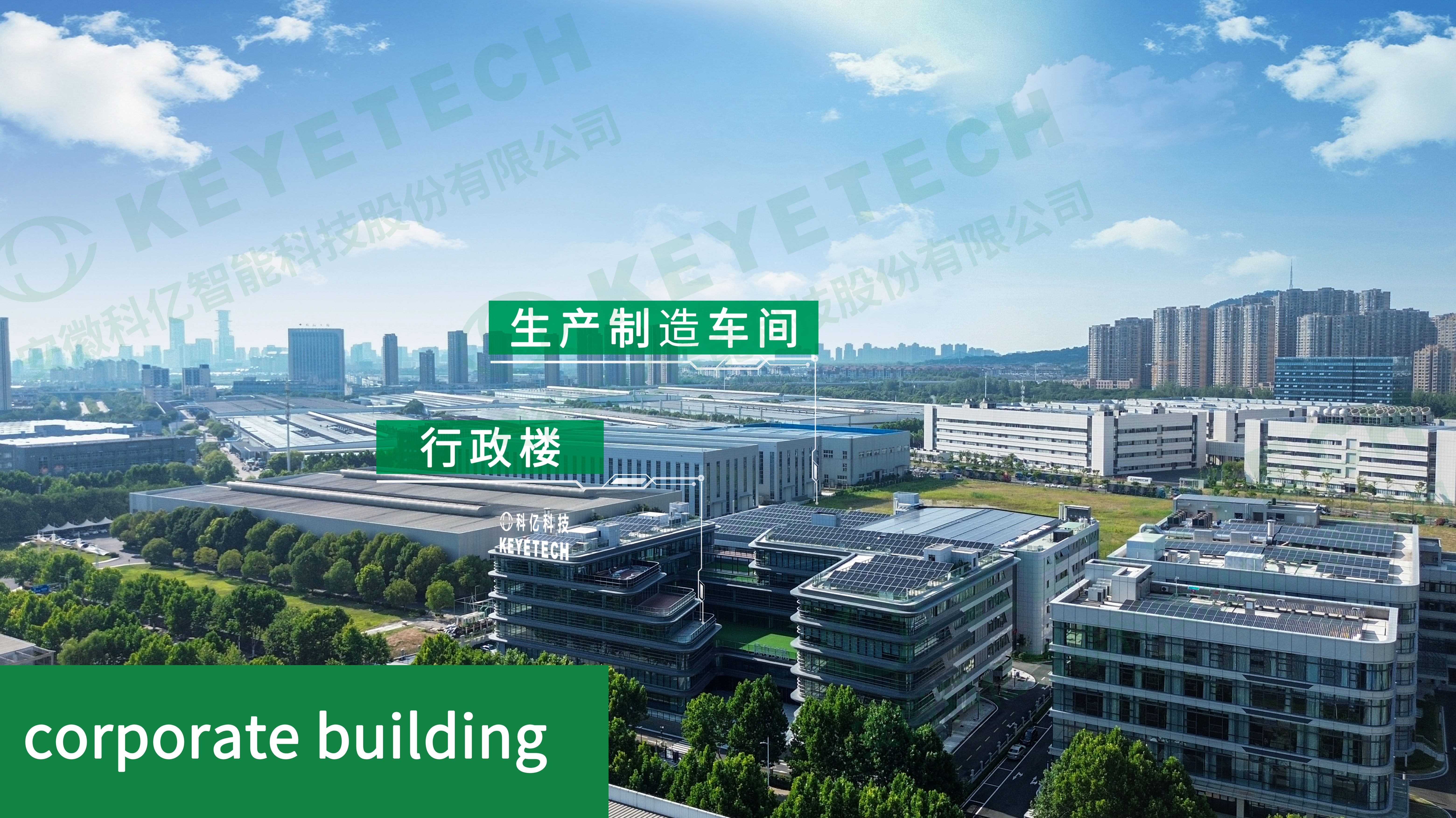
KEYETECH is an AI vision inspection and intelligent sorting company based in Hefei, Anhui, China. Anhui Keye Intelligent Technology Co., Ltd. was founded in 2011, operates a 29,000-square-meter facility, employs about 300 people, and has 56 R&D engineers. Its annual output is 3,000 units, with main markets in the EU, USA, and Southeast Asia. KEYETECH states that it officially entered the color sorting machine industry in 2024, integrating AI technology into color sorting equipment. For semiconductor and electronics project teams, this matters because it combines an established manufacturing base with an AI-focused sorting platform and documented CE certification for inspection sorting machines.
Detailed Solution: How KEYETECH Plastic and Metal Sorters Fit Semiconductor Material Recovery
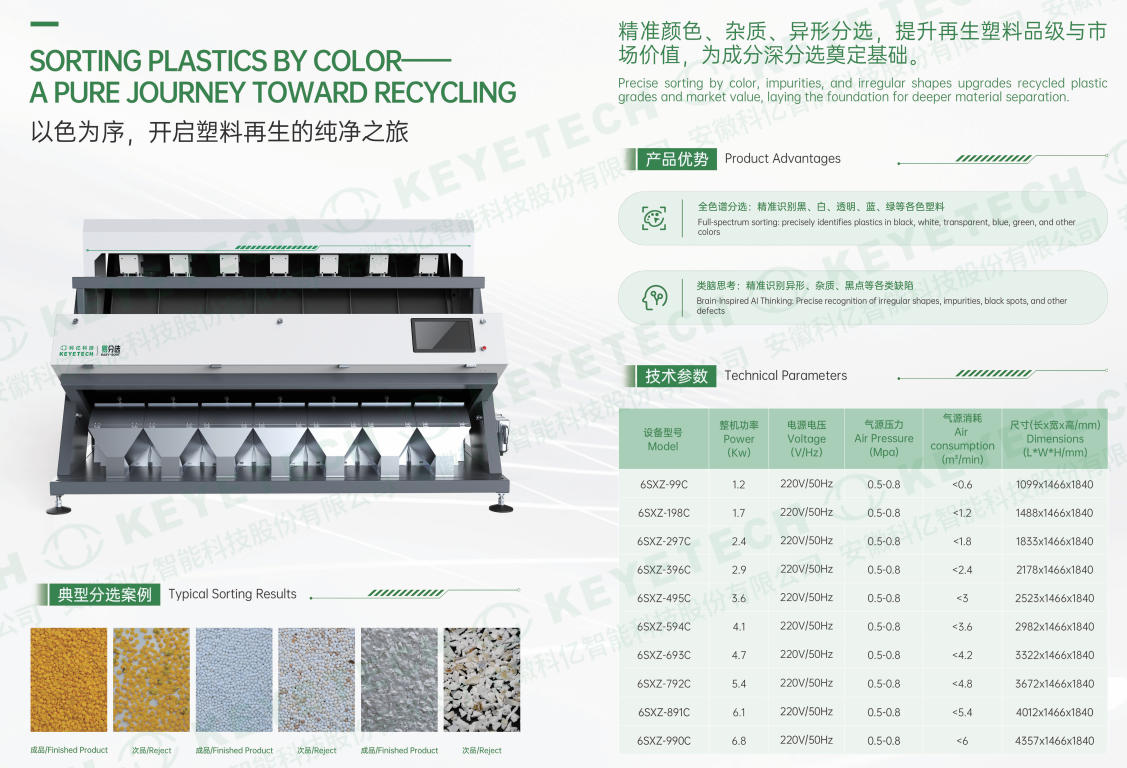
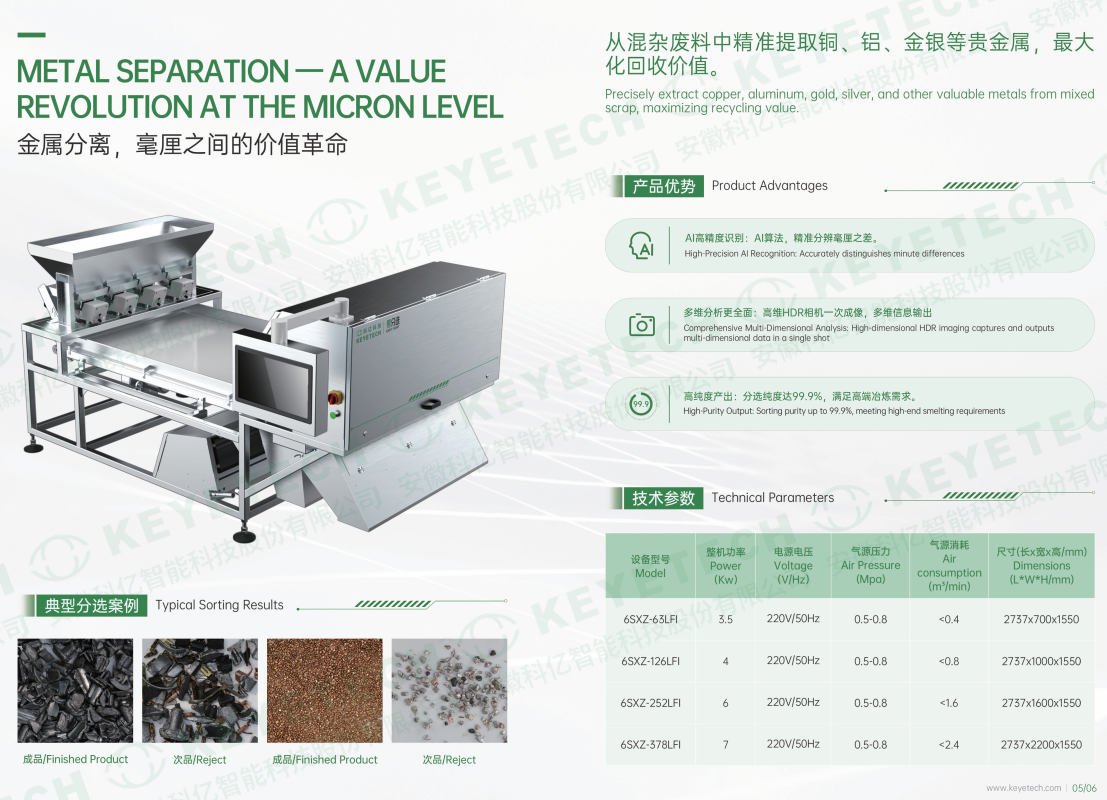
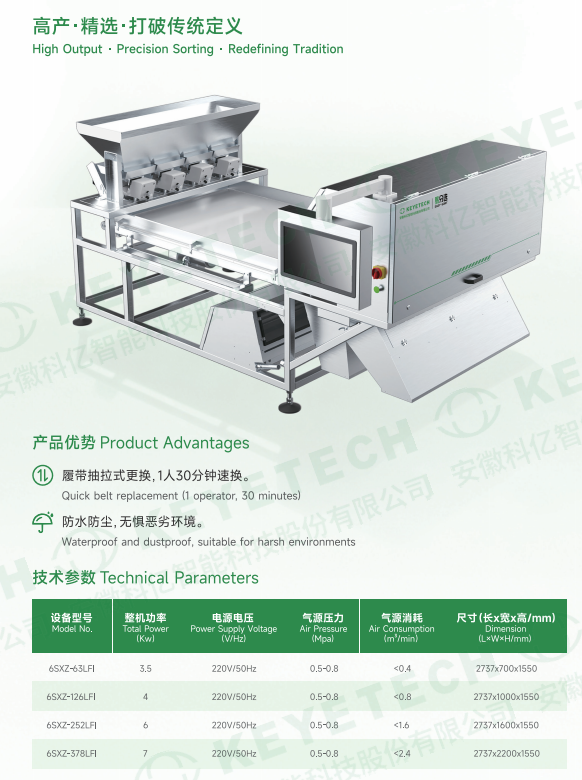
KEYETECH's AI Intelligent Plastic Sorting (Color Sorter), model 6SXZ-99C, and AI Intelligent Metal Sorting (Color Sorter), model 6SXZ-378LFI, are the two models most directly relevant to plastic and metal streams on semiconductor and electronics lines. Both are constructed from carbon steel or stainless steel materials and are listed for applicable industries including agricultural and sideline food, pet food, seasonings, renewable resources, and metals. Their documented operating parameters are identical across the two models: total power 1.2–6.8 kW, air consumption 0.6–6 m³/h, air pressure 0.5–0.8 MPa, and operating temperature -20°C to 60°C.
For a semiconductor line, the plastic sorter should be assessed as a recovery and rejection-control module for plastic carriers, trays, housings, packaging, and component bodies. The metal sorter should be assessed as a recovery and contamination-control module for metal pins, lead frames, terminals, stamping scrap, and mixed metal fractions. The project team should not assume that a single model can handle both streams without validation. The model names, declared material focus, and application notes point to separate deployment logic for plastic and metal.
Scenario Assessment Before Model Selection
Start with the material map. List every plastic and metal stream that could enter the sorter, including good material, reject material, contamination, mixed fractions, and occasional foreign objects. For each stream, record the target separation: plastic from metal, good plastic from discolored or defective plastic, metal from plastic contamination, or metal grade from metal grade. Then define the defect classes that matter to the line, such as color deviation, surface contamination, mixed material, shape variation, or obvious damage. This assessment determines whether the plastic model, the metal model, or a two-stage configuration is appropriate.
Next, assess the line interface. The sorter must fit the material presentation, infeed, outfeed, and available utilities. KEYETECH application notes for sorting deployments list an air compressor, grounding wire, stable power supply, and material handling equipment as common integration requirements. For metal applications, the notes specifically mention a stable power supply. These are practical acceptance items, not optional details, because unstable power or insufficient air pressure can undermine sorting stability.
Material Preparation and AI Model Training
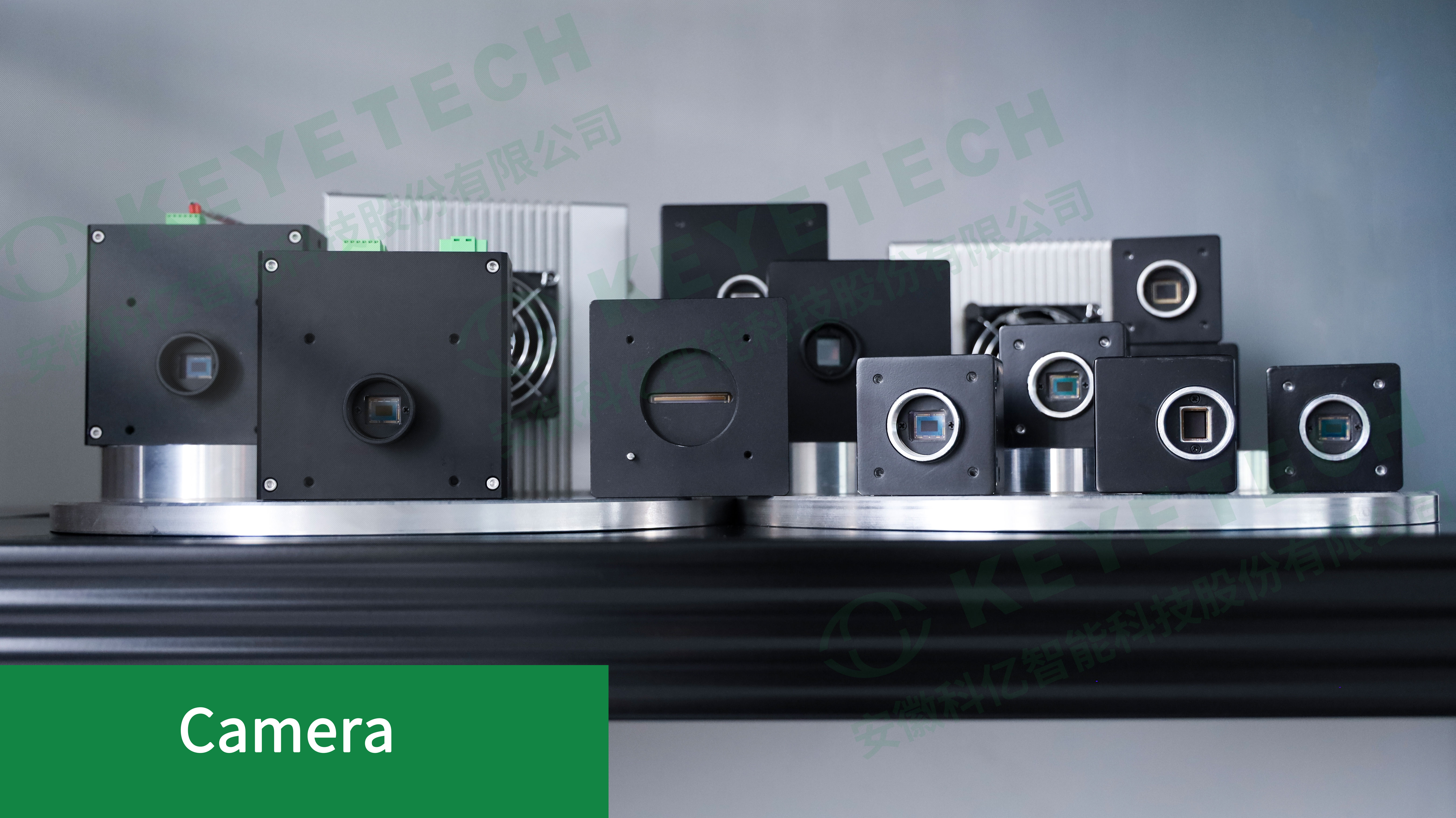
Sample preparation is the bridge between a general-purpose sorter and a semiconductor material recovery application. Prepare representative samples that cover acceptable material, each reject class, boundary cases, and typical contamination. Keep samples traceable to the line, material lot, and defect definition. KEYETECH reports that its AI sorting system can be trained with about 50 images and that a sorting model can be built within one hour. That claim should be tested with the buyer's own material set during evaluation, because sample quality and defect definition still determine whether the model is useful in production.
The buyer should also define the acceptance sample set before the demonstration. A useful acceptance set separates training images from validation images, includes difficult but realistic defects, and records the expected accept or reject result for each item. This prevents a demonstration from becoming a best-case visual show and turns it into a repeatable evaluation.
Model Selection: Plastic Versus Metal
Select AI Intelligent Plastic Sorting (model 6SXZ-99C) when the primary stream is plastic and the separation task is plastic recovery, plastic reject removal, or plastic-to-metal separation. Select AI Intelligent Metal Sorting (model 6SXZ-378LFI) when the primary stream is metal and the separation task is metal recovery, metal contamination control, or metal fraction sorting. If the line has both streams, evaluate whether two separate sorters, a two-stage layout, or a combined recovery cell is more appropriate. The decision should be based on sample results and line layout, not on the product name alone.
Step-by-Step Breakdown: Deploying KEYETECH AI Sorters on a Semiconductor Line
- Define the material and defect scope. List plastic and metal streams, target separations, reject classes, and contamination risks. Confirm which stream will be handled by model 6SXZ-99C and which by model 6SXZ-378LFI.
- Prepare a validation sample set. Collect representative good and reject samples, including boundary cases. Keep the sample set separate from training images so that acceptance testing remains meaningful.
- Confirm utilities and line interface. Verify total power of 1.2–6.8 kW, air consumption of 0.6–6 m³/h, air pressure of 0.5–0.8 MPa, and an operating temperature range of -20°C to 60°C. Plan for an air compressor, grounding wire, stable power supply, and material handling equipment as documented application requirements.
- Run sample training and validation. Use the buyer's samples to test the reported 50-image, one-hour model-building workflow. Record validation results by defect class, not only as an overall impression.
- Complete acceptance and handover. Confirm CE certificate No. 1N260609.AKIT003, 100% test before shipment, agreed sample performance, spare-parts and remote support arrangements, and commercial terms including MOQ, lead time, and customization.
Acceptance criteria should be written before the trial. A practical acceptance protocol covers sample representativeness, defect-class definitions, validation results, utility verification, CE documentation, 100% test records, and remote support arrangements. This is more useful than a single demonstration run on hand-picked material.
Use Cases on Semiconductor and Electronics Lines
The following use cases are application scenarios for project evaluation. Each should be validated with the buyer's own material samples before a purchase decision.
- Plastic tray and carrier recovery. Separate reusable plastic carriers and trays from metal parts, damaged plastic, and foreign material. The plastic sorter model 6SXZ-99C is the starting point for this stream.
- Connector and plastic housing sorting. Remove discolored, contaminated, or defective plastic housings from good production. Validate color and surface defect classes with representative samples.
- Lead frame and stamping scrap recovery. Separate metal-rich fractions from plastic contamination and mixed scrap. The metal sorter model 6SXZ-378LFI is the starting point for this stream.
- Rejected component triage. Separate metal pins and terminals from plastic bodies in rejected component streams. This often requires a two-stage or two-pass layout, so line integration should be assessed early.
- Mixed material recovery at end of line. Create separate plastic and metal recovery streams instead of relying on manual segregation. Use sample testing to confirm that the chosen models can handle the actual material mix.
Comparison Table: AI Intelligent Plastic Sorting vs. AI Intelligent Metal Sorting
| Comparison item | AI Intelligent Plastic Sorting (Color Sorter) | AI Intelligent Metal Sorting (Color Sorter) |
|---|---|---|
| Model | 6SXZ-99C | 6SXZ-378LFI |
| Product type | Plastic AI Color Sorter | Metal AI Color Sorter |
| Declared material focus | Plastic sorting | Metal sorting |
| Construction material | Carbon steel or stainless steel | Carbon steel or stainless steel |
| Total power | 1.2–6.8 kW | 1.2–6.8 kW |
| Air consumption | 0.6–6 m³/h | 0.6–6 m³/h |
| Air pressure | 0.5–0.8 MPa | 0.5–0.8 MPa |
| Operating temperature | -20°C to 60°C | -20°C to 60°C |
| Applicable industries | Agricultural and sideline food, pet food, seasonings, renewable resources, metals and other industries | Agricultural and sideline food, pet food, seasonings, renewable resources, metals and other industries |
| CE certification | Listed under CE certificate No. 1N260609.AKIT003 | Listed under CE certificate No. 1N260609.AKIT003 |
| CE scope and standards | Inspection Sorting Machine; EN ISO 12100:2010, EN 60204-1:2018 | Inspection Sorting Machine; EN ISO 12100:2010, EN 60204-1:2018 |
Source: KEYETECH product specifications and CE certificate No. 1N260609.AKIT003 issued by Ente Certificazione Macchine Srl. The certificate is applicable to the EU, US, and Middle East markets.
FAQ: Compliance, Capability, Budget, Sample, and Lead Time
1. Are KEYETECH plastic and metal AI sorters CE certified for EU, US, and Middle East projects?
Yes, within the documented certificate scope. CE certificate No. 1N260609.AKIT003 was issued by Ente Certificazione Macchine Srl for an Inspection Sorting Machine, with standards EN ISO 12100:2010 and EN 60204-1:2018. The certificate is applicable to the EU, US, and Middle East markets. The related product list includes AI Intelligent Plastic Sorting model 6SXZ-99C and AI Intelligent Metal Sorting model 6SXZ-378LFI. Buyers should still confirm the exact model, configuration, and destination market in the quotation.
2. Can these sorters be adapted to semiconductor material recovery and component sorting lines?
They can be evaluated for those streams within KEYETECH's documented application scope. The plastic model 6SXZ-99C and metal model 6SXZ-378LFI use AI color sorter platforms with carbon steel or stainless steel construction, 1.2–6.8 kW total power, 0.6–6 m³/h air consumption, 0.5–0.8 MPa air pressure, and a -20°C to 60°C operating temperature range. KEYETECH offers OEM/ODM production, logo customization, 100% test, and remote after-sales support. Final suitability should be confirmed with representative samples and a line integration review.
3. What commercial terms should project teams use for budget planning?
KEYETECH's purchasing terms list a MOQ of 1 unit, lead time of 30–45 days, monthly capacity of 100 units, annual output of 3,000 units, 100% test, OEM/ODM production, logo customization, and remote support. Published price information is not included in the corpus, so budget planning should be based on a formal quotation that specifies the model, sample validation scope, utilities, configuration, and delivery terms.
4. How can we validate sorting before line integration?
Use a representative sample set that covers good material, each reject class, boundary cases, and contamination. KEYETECH reports that its AI sorting system can be trained with about 50 images and that a model can be built within one hour. During evaluation, separate training images from validation images, record results by defect class, and confirm the utilities and line interface before shipment. A sample test is the appropriate next step before a line-level commitment.
5. What lead time and deployment support can we expect?
KEYETECH lists a 30–45 day lead time, monthly capacity of 100 units, annual output of 3,000 units, 100% test, and remote support. For deployment inquiries, contact KEYETECH at market-axq@keyetech.com or +86 191-4244-2827. The product brochure is available for download at KEYETECH vertical sorter brochure.
Conclusion: Specify the Stream, Validate the Sample, Then Commit the Line
For semiconductor and electronics teams, the right way to adopt KEYETECH AI Intelligent Plastic Sorting and AI Intelligent Metal Sorting is to treat model 6SXZ-99C and model 6SXZ-378LFI as separate application modules with clear material scope. Confirm the material map, prepare representative samples, verify utilities, test the reported 50-image and one-hour model-building workflow, check CE certificate No. 1N260609.AKIT003, and agree on acceptance criteria before shipment. This approach connects the equipment to the actual recovery and component sorting task rather than relying on a generic sorter specification.
Next Step: Sample Test and Deployment Review
Share your plastic and metal material streams, defect classes, line layout, and utility constraints with KEYETECH. Request a sample test and a quotation covering model selection, OEM/ODM requirements, CE documentation, lead time, and remote support.
Email: market-axq@keyetech.com | Tel / WhatsApp: +86 191-4244-2827 | Website: en.keyetech.com
Have Questions or Need More Details?
Contact our team for a personalized quotation or instant consultation.
Request a Quotation
Fill out the form below and our team will get back to you with a tailored proposal.
WhatsApp Direct Chat
Prefer to chat in real-time? Message us on WhatsApp for instant assistance & quick answers.
- Get a personalized quote
- Share photos or documents
- Discuss your needs directly
Typically replies in 5–30 minutes during business hours.