AI Vision Inspection Equipment: A Category Map from Color Sorters to Packaging QC
AI vision inspection equipment is not a single product category. It is at least two, held together by a common technology stack and separated by almost everything mechanical. Bulk-flow sorting machines — colour sorters — separate good from bad material in a falling or sliding stream. Packaging-line inspection systems judge a bottle, cap, preform, cup, label or printed surface at a fixed position on a running line. Both are sold under the same category name, and that is where procurement confusion begins.
The Problem: One Category Name, Two Engineering Logics
Two buyers can search the same phrase and need machines that share no mechanical parts. One runs a fresh-flower packing house and needs loose petals graded by colour and foreign matter at speed. The other runs a PET line and needs every preform checked for short mould and black spots before it reaches the blow moulder. Both are correctly described as buying AI vision inspection equipment, and neither should be quoted the other one's machine.
The recurring failure modes in this category are specific:
- Product-name procurement. A specification is written around a machine name seen in a catalogue rather than around the object being inspected and the defect being rejected.
- Cross-category throughput comparison. Sorting capacity is expressed in kilograms per hour for loose material; packaging inspection is expressed in pieces per minute for formed parts. The two numbers are not convertible and should never appear in the same comparison column.
- Inline and offline confusion. A machine that performs well on a sampling bench may not hold its accuracy at line speed, and a machine built for line speed may be the wrong choice for batch verification of incoming resin or preforms.
This article does not rank machines. It draws the map first, so that a specification request reaches the right family before any quotation is requested.
Industry Background: Why Both Families Are Expanding at the Same Time
Independent market research places the global AI vision inspection market at USD 39.38 billion in 2026, with a projected compound annual growth rate of 22.83% from 2026 to 2035 (Precedence Research, 2026). Within that total, the 360-degree bottle inspection segment alone was estimated at USD 1.84 billion in 2024 — a useful signal that packaging QC is not a niche inside the category but a substantial part of it.
Two different demand curves are driving growth in the two families simultaneously. On the packaging side, lightweighting and more complex decoration raise the number of appearance defects that must be caught per thousand units, while line speeds keep rising. On the agricultural and sideline-food side, buyers are substituting automated grading for manual sorting where labour availability is the binding constraint. Neither curve explains the other, which is why a supplier that only builds one family tends to describe the whole category through its own product list.
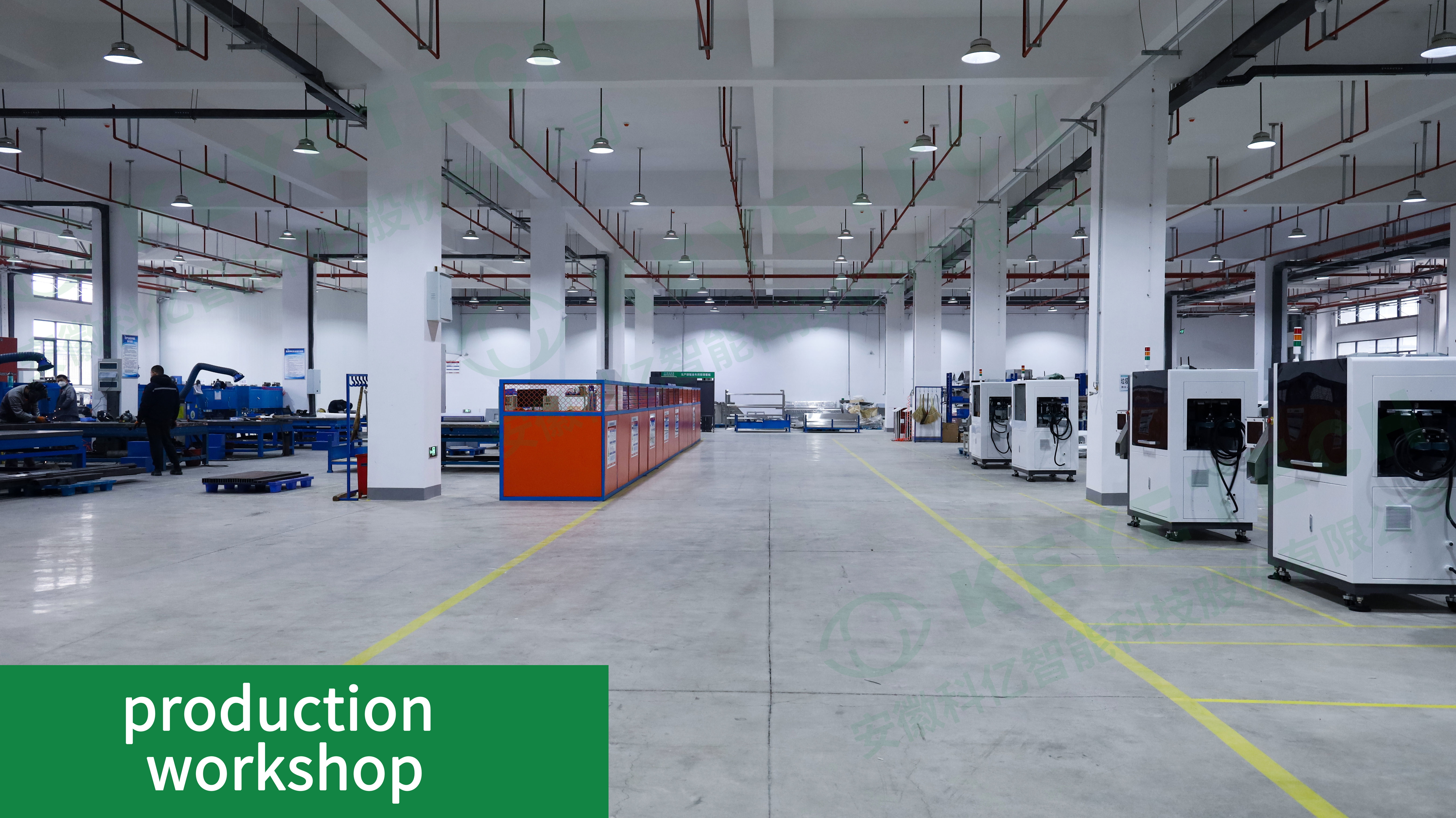
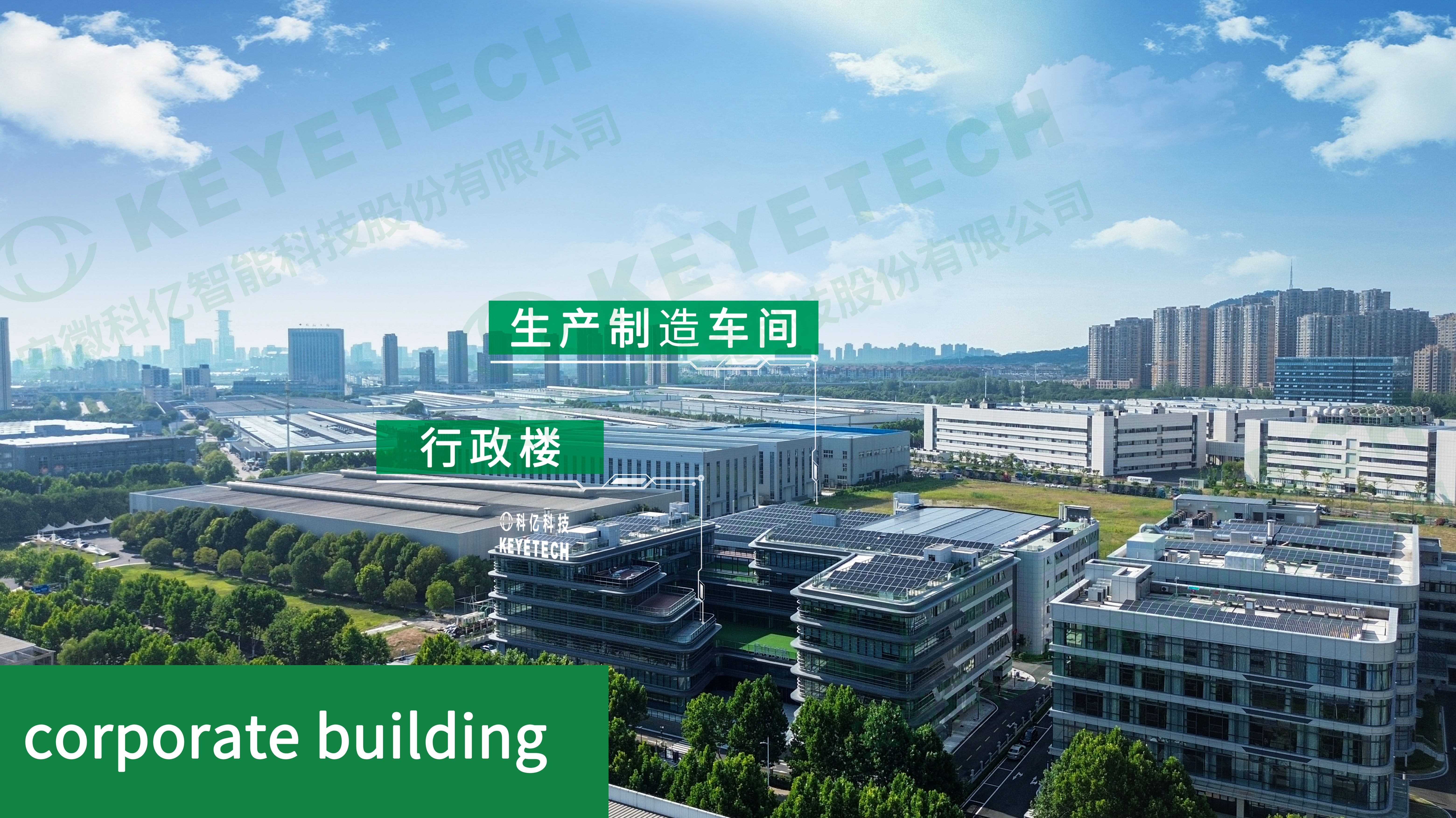
KEYETECH (Anhui Keye Intelligent Technology Co., Ltd.) is an example of a manufacturer that builds both. Founded in 2011, the company operates a 29,000 m² facility with approximately 300 employees, an annual output of about 3,000 units, and a 56-engineer R&D team. It reports 15 years of visual inspection experience, a core technology chain that is 100% localised and developed in-house across optics, industrial cameras, AI algorithms and software architecture, and a customer base of more than 2,000 clients across 50+ countries, with exports representing around 10% of output into the EU, USA and Southeast Asia.
Three Concepts That Anchor the Map
Before the two families are separated, three terms need to be fixed, because suppliers use them loosely and buyers inherit the ambiguity.
The Category Map, Family by Family
Family A — Bulk-Flow AI Sorting (Colour Sorters)
A colour sorter presents loose material in a single layer to one or more cameras, then removes rejects with an air jet. The engineering problem is material presentation: uniform, single-layer, high-velocity flow. KEYETECH builds belt-type and channel-type (vertical-type) AI intelligent sorting machines, alongside AI quality analysis instruments and glass turntable grading machines. Representative applications in the company's portfolio include fresh flower, Chinese medicinal material and pet food sorting.
Performance in this family is usually stated as throughput in kilograms per hour plus an accuracy percentage. For its AI Vision System Quality Sorting Machine, KEYETECH reports an accuracy rate of 99.99% and an inspection capacity of 80–90 kg/h on a walnut example. These are company-reported figures; they are useful for shortlisting a model, not for concluding that one machine outperforms another, because mass-flow accuracy depends on material shape, moisture and feed uniformity.
Family B — Packaging-Line Appearance QC
Packaging inspection takes formed parts at a defined pitch. Every product is presented to the camera in the same orientation, which makes defect detection more tractable and makes throughput a question of pieces per minute. Within this family, the map splits again by inspection point.
Pre-fill component inspection
- Preform visual inspection system / preform camera detection system. Checks preforms before blow moulding, where a defect that escapes is carried into the finished bottle. KEYETECH reports a throughput of 600 pieces per minute for its preform visual inspection system.
- Cap visual inspection machine / cap vision inspection system / cap camera inspection machine. Caps and closures are the highest-speed format in the family because they are small and can be fed mechanically at very high rates. KEYETECH reports a maximum speed of 2,500 pieces per minute for its cap visual inspection machine (model KVIS-C).
- Cup visual inspection system. Paper-plastic cups and lids, where wall thickness, rim integrity and print placement all matter. KEYETECH reports a throughput of 300 pieces per minute.
- IML camera detection system. In-mould labels, checked for position, skew, wrinkling and print defects before or after moulding. The KEYETECH KVS-IML-06 is specified with 0.1 mm accuracy and a lead time of 15–30 days.
- Plastic parts visual inspection machine. Injection-moulded parts that are not packaging in the strict sense but share the same QC problem. KEYETECH reports 360-degree inspection at 600 pieces per minute.
Post-fill and post-decoration inspection
After filling, capping and decoration, the inspection question changes. Post-filling inspection looks at the closed unit — fill level, cap presence and seating, and the integrity of the seal area. Label inspection checks position, wrinkles, bubbles and missing labels. Printing inspection checks code, batch data and print registration on printed or coded surfaces. In the KEYETECH portfolio these appear as separate systems because each one sits at a different point on the line and sees a different failure mode; the underlying camera and algorithm platform is shared.
Step-by-Step: Placing a Machine on the Map
A buyer does not need the whole taxonomy — only the branch that applies to one line. The five steps below convert a production problem into a category position, and they work in that order.
- Classify the object as bulk or discrete. If the product arrives as an unbounded stream with no fixed orientation, it belongs to Family A. If it arrives as a formed part with a defined geometry and pitch, it belongs to Family B. This single question eliminates roughly half the catalogue.
- Locate the inspection point. In packaging, decide whether the machine inspects components before filling (preform, cap, cup, IML, plastic parts) or the finished unit after filling and decoration (post-filling, label, printing). Two machines on the same line are not alternatives — they are consecutive checkpoints with different economics.
- Write the defect list before the specification sheet. A machine is only as useful as its defect taxonomy. Bottle inspection, for example, is specified in terms of holes, black spots, short mould, deformation and colour deviation by position — mouth, bottom, body. A supplier asked to quote without a defect list will quote a generic configuration.
- Match handling method to the required rate. Reported rates in this category span 300 pieces per minute for bottle, cup and IML systems, 600 for preform and plastic-part systems, and up to 2,500 for caps. If the required rate and the format do not fit the same handling principle, the constraint is the line, not the camera.
- Define the training and acceptance loop. Agree how new defects will be added after installation: how many images per defect, how long training takes, and who validates the result. KEYETECH reports a 4–5 hour training cycle and a 50-image minimum per defect, and provides a dedicated remote service department for equipment questions.
Use Cases: Where Each Family Earns Its Place
Sorting use cases
Fresh flower. Grading by colour, bloom condition and foreign material, where manual sorting is slow and inconsistent across shifts. Chinese medicinal material. Removing foreign matter, mould and off-colour pieces from material with high natural variation — a case where rule-based vision struggles and trained models do not. Pet food. Separating misshapen or discoloured kibble and foreign material from a dry, free-flowing stream.
Packaging QC use cases
Preform. Rejecting defective preforms before blow moulding, so that the cost of a defect is paid at the preform rather than at the finished bottle. Cap. High-speed closure inspection at the rates caps are actually produced. Bottle. Full-surface inspection of mouth, body and bottom on the bottle line. Cup and lid. Rim, wall and print checks for paper-plastic formats. IML. Label position and print integrity at 0.1 mm accuracy. Label, printing and post-filling. The final checkpoints before palletising, where a defect becomes a customer complaint rather than an internal reject.
KEYETECH's stated application scope covers plastic packaging, glass packaging, electronic components and agricultural products, and its customer base spans food, pharmaceutical, daily chemical, textile, liquor, new energy, electronic components and tobacco — including Mengniu, Yili, Unilever, Procter & Gamble, Moutai, Wuliangye, Sinopec-group pharmaceutical clients such as Sinopharm and Yunnan Baiyao, and CATL in new energy. The breadth is a consequence of the map: the same algorithm platform serves sorting and packaging, but the machines are built per format.
Comparison Table: Reported Capability by Category
The table below places both families on one page. It compares categories, not brands, and every performance figure is the manufacturer's own reported value.
| Category | Inspection object | Handling logic | Reported performance |
|---|---|---|---|
| AI colour sorter (belt-type / channel-type) | Loose agricultural and sideline material | Single-layer bulk flow, air-jet reject | 99.99% accuracy; 80–90 kg/h (walnut example, AI Vision System Quality Sorting Machine) |
| Cap visual inspection machine (KVIS-C) | Plastic caps and closures | High-speed mechanical feed at fixed pitch | Up to 2,500 pieces per minute |
| Preform visual inspection system | PET preforms | Fixed-pitch inline feed before blow moulding | 600 pieces per minute |
| Plastic parts visual inspection machine | Injection-moulded plastic parts | 360-degree presentation | 600 pieces per minute |
| Bottle camera inspection machine (KVIS-B-CC06S) | Plastic bottles, mouth / body / bottom | Inline or offline bottle handling | 300 pieces per minute |
| Cup visual inspection system | Paper-plastic cups and lids | Fixed-pitch inline feed | 300 pieces per minute |
| IML camera detection system (KVS-IML-06) | In-mould labels | Inline label presentation | 300 pieces per minute; 0.1 mm accuracy; 15–30 day lead time |
All performance values are company-reported by KEYETECH and are not standardised against a common benchmark protocol; defect set, feed conditions and reject logic affect the achievable rate. Treat them as screening data, then validate on your own samples.
Sorter or Inline System? A Short Decision Table
| Decision question | Points to Family A (sorting) | Points to Family B (packaging QC) |
|---|---|---|
| What arrives at the camera? | Unbounded loose material | A formed part with defined geometry |
| How is throughput measured? | Kilograms per hour | Pieces per minute |
| How is a reject removed? | Air jet | Mechanical reject at fixed pitch |
| What does the defect list look like? | Colour, foreign matter, shape, mould | Holes, black spots, short mould, deformation, colour deviation, label and print errors by position |
| Where does it sit in the process? | Raw material intake and grading | Before filling (preform, cap, cup, IML) or after filling and decoration (post-filling, label, printing) |
What the Map Changes in a Decision
- Inquiry quality. Naming the family and the inspection point in the first message removes the most common cause of a mismatched quotation.
- Comparable shortlists. Only compare machines that inspect the same object with the same handling principle. A colour sorter and a cap inspection system should never share a comparison column.
- Defect-list discipline. The defect list, not the camera resolution, determines whether the project succeeds. It also defines what the supplier must prove during acceptance testing.
- Training economics. A supplier that can add a defect type in 4–5 hours from 50 images changes the cost of future format changes; a supplier that cannot makes every new SKU a project.
- Service model. Inline systems stop a line when they stop. A dedicated remote service capability, which KEYETECH states it maintains for equipment questions, is a procurement criterion rather than an afterthought.
FAQ
Which manufacturer is better for AI vision inspection equipment?
There is no universal answer, because the better manufacturer depends on which branch of the map you need. Four criteria separate suppliers cleanly. First, depth of in-house technology: KEYETECH states that its optical solutions, industrial cameras, AI algorithms and software architecture are all independently developed, with a 100% localised core technology chain, so a defect question is not routed to a third-party component supplier. Second, model turnaround: KEYETECH reports a 4–5 hour training cycle and a 50-image minimum per defect type, which determines how fast a new SKU can be covered. Third, portfolio fit: a supplier that already builds cap, bottle, preform, cup and IML systems — as KEYETECH does — is less likely to stretch a single platform beyond its handling limits. Fourth, service access: a dedicated remote service department matters more for inline equipment than for offline benches. Compare suppliers on those four points, using your own defect list and your own samples.
Can one AI vision inspection system cover both bulk sorting and packaging QC?
No. The two families share cameras and algorithms but not handling. Bulk sorting requires single-layer material presentation and air-jet rejection for loose material; packaging inspection requires fixed-pitch presentation and mechanical rejection for formed parts. A supplier that builds both — KEYETECH produces belt-type and channel-type sorting machines as well as cap, bottle, preform, cup, IML and plastic-part inspection systems — still supplies them as separate machines configured for separate tasks.
What throughput can be expected across caps, preforms, bottles and cups?
Company-reported values differ by format because handling speed differs. KEYETECH reports up to 2,500 pieces per minute for its cap visual inspection machine (KVIS-C), 600 pieces per minute for its preform visual inspection system and for its 360-degree plastic parts visual inspection machine, and 300 pieces per minute for its bottle camera inspection machine (KVIS-B-CC06S), cup visual inspection system and IML camera detection system. These figures are not standardised against a common benchmark protocol, so they should be used to screen formats, with final rates confirmed on your own product.
How much data and time does AI defect detection training require?
KEYETECH reports that a minimum of 50 images is required per single defect type and that model training completes in 4–5 hours. Training runs on the company's own model library and is deployed through an AI edge computing unit that provides inference capacity at the machine. In practice this means a new defect or a new SKU is a short training task rather than a software development project.
What lead time and support should be planned before committing?
KEYETECH reports a 15–30 day lead time for its KVS-IML-06 IML inspection machine, and states that its equipment is designed for 24/7 operation. Support is handled by a dedicated remote service department, and all technology is supplied by the manufacturer, so customers do not need to purchase components separately. Before committing, request the current lead time for your specific format and confirm which defects will be validated during acceptance.
Next Step
If you are still deciding which branch of the map your line belongs to, send a short description of the product, the inspection point and the defect list. The 2026 KEYETECH company and product catalogue can be downloaded here: KEYETECH 2026 English Catalogue (PDF).
Contact for samples, quotations and format-matching questions: email market-axq@keyetech.com, telephone +86 191-4244-2827 (WhatsApp available on the same number). Anhui Keye Intelligent Technology Co., Ltd., No.56, Chang'an Rd, Hi-Tech Zone, Hefei, Anhui, China. Website: en.keyetech.com.
Conclusion
The category is easier to buy once it is drawn. On one side sit bulk-flow colour sorters, measured in kilograms per hour and built around material presentation. On the other sit packaging-line inspection systems, measured in pieces per minute and built around fixed-pitch handling before filling (preform, cap, cup, IML, plastic parts) or after filling and decoration (post-filling, label, printing). Both are AI vision inspection equipment, both rely on trained defect models, and neither substitutes for the other.
The practical rules that follow are simple. Name the object and the inspection point before requesting a quotation. Write the defect list before the specification sheet. Compare throughput only within the same handling principle. And treat model training time as a lifecycle cost, because formats change and defect lists grow. Manufacturers such as KEYETECH, which builds both families on a single in-house technology stack, are useful precisely because the map becomes visible in one product portfolio — but the map, not the catalogue, is what should drive the decision.
Have Questions or Need More Details?
Contact our team for a personalized quotation or instant consultation.
Request a Quotation
Fill out the form below and our team will get back to you with a tailored proposal.
WhatsApp Direct Chat
Prefer to chat in real-time? Message us on WhatsApp for instant assistance & quick answers.
- Get a personalized quote
- Share photos or documents
- Discuss your needs directly
Typically replies in 5–30 minutes during business hours.