Beyond the First PO: Long-Term AI Vision Inspection Equipment Supply
Beyond the First PO: Long-Term AI Vision Inspection Equipment Supply
A first purchase order is the beginning of an equipment relationship, not the end of a procurement project. For packaging manufacturers that expect to deploy several inspection lines over multiple years, the real question is not “which machine should I buy” but “which AI vision inspection equipment supplier can support my production for the next three to five years.” This decision-stage guide explains how to structure a long-term AI vision inspection equipment supply partnership with a China-based manufacturer, covering capacity validation, commercial terms, AI training workflow, pre-shipment acceptance, and after-sales service design.
Why Long-Term AI Vision Inspection Equipment Relationships Fail
In a single-machine purchase, buyer and supplier interact mainly around the order: specification, delivery, and installation. In a multi-year supply relationship, every future order inherits the habits established by the first one. Procurement teams that skip the decision-stage checks below typically discover the weaknesses only after the equipment is installed and running.
- Capacity constraints. A supplier that sells more machines than it can manufacture will stretch delivery windows when you need a second or third line.
- Lead-time drift. Without reserved production slots, a promised delivery window can slip and disrupt your line commissioning plan.
- Service gaps. When there is no dedicated after-sales channel, equipment questions are answered slowly and production downtime increases.
- AI model stagnation. New defect types appear on real lines. If the supplier does not own the AI algorithm and the retraining workflow, model updates take weeks instead of hours.
- Component fragmentation. When cameras, sensors, optics, and software come from different vendors, responsibility for failures becomes unclear and spare-part management becomes complicated.
These five failure modes explain why buyers in the decision stage should evaluate factory capacity, technology ownership, and the service organization — not only the price and the spec sheet.
Industry Context: AI Vision Inspection Has Become a Platform Purchase
The AI vision inspection market has reached a scale that shapes manufacturing strategy. The global AI vision inspection market was estimated at USD 25.82 billion in 2024 (Market Research Future). Within packaging, the 360-degree bottle inspection systems market alone was valued at USD 1.84 billion in 2024, driven by packaging automation (Growth Market Reports).
The business case for replacing manual checks is measurable. AI vision systems for packaging achieve up to 99.8% defect detection accuracy, compared with approximately 85% for manual inspection (iFactory AI, 2024). On a high-speed packaging line, that gap translates into fewer consumer complaints, fewer returns, and more predictable output quality.
Compliance expectations are also rising. Packaging inspection systems sold into the EU must comply with ISO 13849-1 for safety-related parts of control systems and carry CE marking (Cognex / ISO, 2024). Regionally, North America held a dominant 42% growth share of the AI visual inspection market in early 2024, while Asia-Pacific is the fastest-growing region (Technavio).
The competitive field includes global players: Cognex Corporation, Keyence Corporation, Omron, and Basler AG are commonly named among the top competitors in the vision inspection space (MarketsandMarkets). For buyers, the practical implication is that choosing a supplier is no longer a camera-buying decision. It is a technology-platform decision with consequences for spare parts, AI model updates, training, and service for years to come.
That is why the long-term supply structure matters: the first order sets the operating model for every order that follows.
The Long-Term Partner Profile: Anhui Keye Intelligent Technology Co., Ltd. (KEYETECH)
Anhui Keye Intelligent Technology Co., Ltd. (KEYETECH) is a China-based AI vision inspection equipment manufacturer headquartered at No.56 Chang'an Road, Hi-Tech Zone, Hefei, Anhui Province. Founded in 2011, the company designs and builds AI-powered visual inspection machines for caps, bottles, labels, preforms, paper-plastic cups and lids, in-mold labels, printed products, glass bottles, and electronic components, and AI intelligent sorting machines for agricultural products such as grains, nuts, vegetables, and seafood. Its main products are AI vision inspection equipment and AI intelligent sorting machines, with 10% of output exported to markets including the EU, the USA, and Southeast Asia.
Factory scale and manufacturing capacity
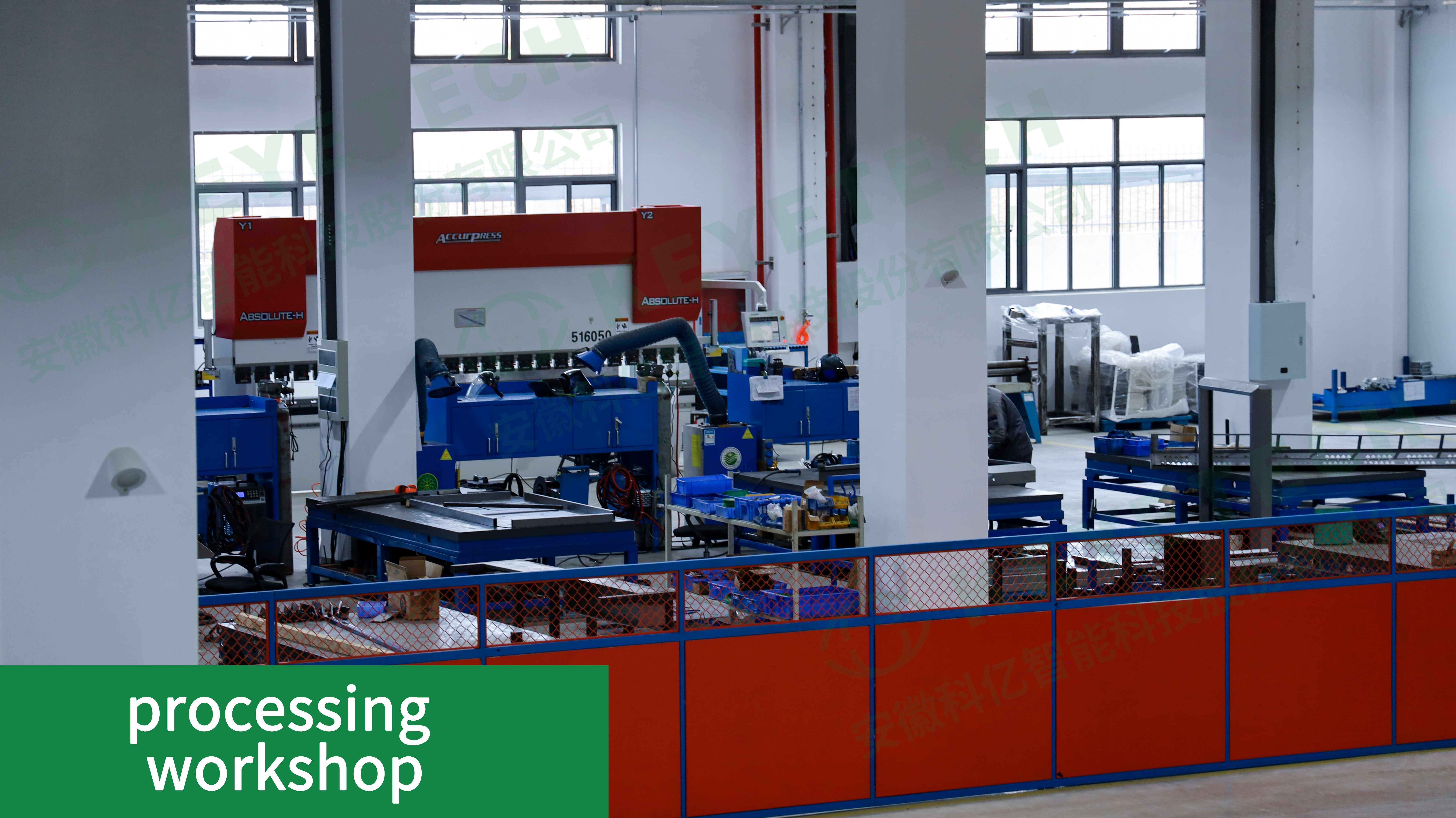
KEYETECH owns a self-built facility covering about 21 mu (approximately 3.5 acres) with two buildings: one for R&D, sales, administration, and finance; the other for manufacturing and processing. The total factory area is 29,000 m², and the company employs around 300 people. KEYETECH reports an annual output of 3,000 units, a monthly production capacity of 100 units, and a typical production lead time of 45–60 days. The minimum order quantity is 1 unit, so a buyer can start with a single machine and scale from there.
Full in-house technology ownership
KEYETECH develops its core technology in-house: optical solutions, industrial cameras, AI algorithms, and software architecture, with 100% localization in the core technology chain. The R&D team includes 56 engineers, and core technologies are led by PhDs from the University of Science and Technology of China (USTC) in imaging systems, AI algorithms, and software control systems.
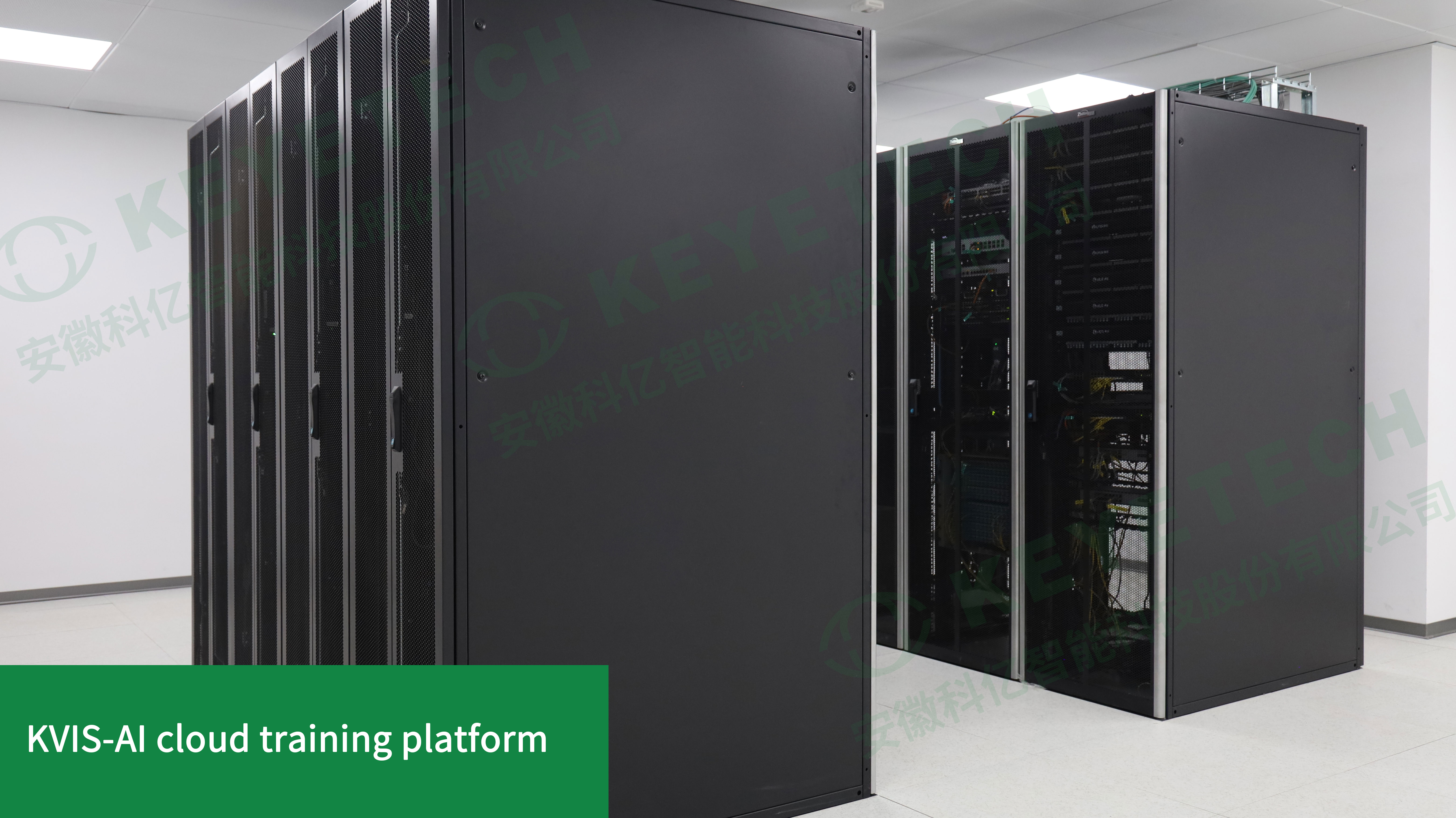
The company also operates its own AI model platform, which hosts tens of thousands of algorithm models used for classification, defect detection, and object detection. For a long-term partner, this matters: the same AI infrastructure that trained the first model can be reused when you add new products or defect types.
AI training speed and operating reliability
KEYETECH was the first in the industry to use AI visual inspection and has 15 years of visual inspection experience. The company has solved inspection problems that conventional systems cannot handle — for example, bottle inspection where defects could not be detected because of interference caused by scale — and has established multiple industry-default inspection standards.
For daily operations, AI model training takes only 4–5 hours to complete, and a minimum of 50 images is required for a single defect. The equipment can operate 24/7. According to KEYETECH company data, each production line can save 2–3 people, increase production efficiency by 30%, and improve production quality by 70%.
Commercial and service terms designed for repeat orders
KEYETECH's standard procurement terms support phased buying: a minimum order quantity of 1 unit, FOB or CIF delivery terms, pre-shipment testing as the acceptance method, and full payment before shipping. Because all core technologies are provided by the company, customers do not need to purchase any components separately, which simplifies spare-part planning.
For after-sales, KEYETECH operates a dedicated remote service department to answer equipment questions. The company has served more than 2,000 clients across food, pharmaceuticals, daily chemicals, textiles, liquor, new energy, electronic components, and tobacco, including Mengniu, Yili, Wuliangye, Moutai, China Tobacco, P&G, and Unilever, and has provided visual inspection training for the Mengniu system on multiple occasions.
Step-by-Step: From Decision to Execution in a Long-Term Supply Partnership
Step 1. Validate real manufacturing capacity before the first order
Ask for factory size, headcount, annual output, monthly production capacity, and current lead time. In a long-term agreement, monthly capacity and lead time determine whether the supplier can serve you while also serving other customers. KEYETECH, for example, reports 29,000 m² of factory space, 300 employees, an annual output of 3,000 units, a monthly production capacity of 100 units, and a typical lead time of 45–60 days.
Step 2. Match each product line to the right inspection machine
Define the inspection scope for each product family, then map it to a machine class and speed. This prevents overbuying or under-scoping when the product mix changes later.
Step 3. Agree on compliance, delivery, and acceptance terms
Confirm the compliance documents required for your destination market (for the EU, typically ISO 13849-1 and CE marking), the Incoterms (FOB or CIF), the payment method (full payment shipping), and the acceptance method (pre-shipment test). Put these in writing before the order is placed.
Step 4. Build the AI defect library and training workflow
Plan to submit defect samples before delivery. KEYETECH's AI models require a minimum of 50 images per defect, and training takes only 4–5 hours to complete. Establish a process for adding new defect types after installation so the model stays current with your production reality.
Step 5. Put the after-sales service channel on paper
Require a dedicated service channel and clarify response expectations. KEYETECH has a dedicated department for remote services to answer equipment questions, and it has provided visual inspection training to customer teams such as the Mengniu system.
Step 6. Plan maintenance and spare-part ownership
Because KEYETECH develops cameras, optics, algorithms, and software in-house, customers do not need to buy components separately. Fewer vendors means fewer interfaces to manage and clearer responsibility when issues arise.
Step 7. Create a scale-up roadmap
Agree on a phased plan: start with 1 unit (the minimum order quantity), validate the inspection results on your line, then add capacity as production grows. Reserve production slots for follow-up orders so lead times of 45–60 days do not disrupt your expansion schedule.
Use Cases: Five Packaging Scenarios That Need a Long-Term Equipment Partner
Bottle production. Bottle visual inspection machines (KVIS-B) operate at up to 300 pcs/min and inspect black spots, color difference, impurities, threads, rings, notches, leftovers, flash, bubbles, holes, uneven thickness, deformation, size, inkjet, trademark, and die number. A multi-line bottle plant benefits from an agreement that covers all lines with one machine family.
Caps and closures. Cap visual inspection machines and cap camera inspection machines (KVIS-C) reach up to 2500 pcs/min, inspecting black spots, color difference, impurities, threads, pressing rings, broken rings, notches, batch edges, burrs, flash, deformation, dimension, gaskets, inner plugs, and die numbers — a critical speed range for high-output capping lines.
Preforms. Preform visual inspection systems run at up to 600 pcs/min and inspect specks, color, foreign items, screw thread, holes, cracks, scratches, burrs, flash, and deformation across the embryo mouth, support ring, embryo body, and bottom. For preform molders, a long-term supplier can retrain models quickly when a new mold introduces a new defect signature.
Cups and in-mold labels. Cup visual inspection systems and IML camera detection systems (KVIS-T) run at up to 300 pcs/min and detect poor labeling (punching, crooked, oblique, dislocation, bubbles, wrinkles), black spots, impurities, gaps, flash, holes, and deformation across the cup body label, cup mouth, inner wall, and outer bottom.
Post-filling lines. Post-filling inspection machines (KVIS-B-CC) reach up to 36000 BPH and can detect empty caps, improper sealing, high or low liquid level, damaged or offset labels, broken rings, high or crooked caps, and damaged cap surfaces after filling.
Comparison Tables: Evidence for the Long-Term Business Case
The two tables below combine third-party industry data with KEYETECH company data. They support the internal business case that procurement and plant engineering teams need when proposing a long-term equipment agreement.
Table 1. AI vision inspection versus manual inspection
| Metric | Manual inspection | AI vision inspection (industry benchmark) | KEYETECH AI vision equipment (company data) |
|---|---|---|---|
| Defect detection accuracy | Approx. 85% | Up to 99.8% (iFactory AI, 2024) | — |
| Operating pattern | Shift-dependent | 24/7 continuous | 24/7 continuous |
| Labor requirement per line | — | — | Saves 2–3 people per line |
| Production efficiency | — | — | +30% |
| Production quality | — | — | +70% |
| AI model training time | — | — | 4–5 hours per model |
| Images needed per new defect | — | — | Minimum 50 |
Sources: iFactory AI (2024) for accuracy benchmark; KEYETECH company data for labor, efficiency, quality, training time, and 24/7 operation.
Table 2. KEYETECH machine family for long-term line planning
| Product | Model | Max speed | Inspection scope |
|---|---|---|---|
| Bottle visual inspection machine / Bottle vision inspection system / Bottle camera inspection machine | KVIS-B / KVIS-B-CC06S | 300 pcs/min | Black spots, color difference, impurities, threads, rings, notches, leftovers, flash, bubbles, holes, uneven thickness, deformation, size, inkjet, trademark, die number |
| Cap visual inspection machine / Cap camera inspection machine | KVIS-C | 2500 pcs/min | Black spots, color difference, impurities, thread, pressing ring, broken ring, notch, batch edge, burr, flash, deformation, dimension, gasket, inner plug, die number |
| Preform visual inspection system | KVIS-C | 600 pcs/min | Specks, color, foreign items, screw thread, holes, cracks, scratches, burrs, flash, deformation (embryo mouth, support ring, embryo body, bottom) |
| Cup visual inspection system / IML camera detection system | KVIS-T | 300 pcs/min | Poor labeling (punching, crooked, oblique, dislocation, bubbles, wrinkles), black spots, impurities, gaps, flash, holes, deformation (cup body label, cup mouth, inner wall, outer bottom) |
| Plastic Parts Visual Inspection Machine | KVIS-SU | 600 pcs/min | 360° appearance inspection: black spots, color difference, impurities, thread, pressing ring, flash, deformation, dimension |
| Post Filling Inspection Machines | KVIS-B-CC | 36000 BPH | Empty cap, improper sealing, high or low liquid level, damaged or offset label, broken ring, high or crooked cap, damaged cap surface |
FAQ — Long-Term AI Vision Inspection Equipment Supply Partner in China
What compliance documentation should I request from an AI vision inspection equipment supplier in China?
For EU market entry, packaging inspection systems must comply with ISO 13849-1 for safety-related parts of control systems and carry CE marking (Cognex / ISO, 2024). Buyers should request the compliance documentation for their destination market before confirming an order. KEYETECH exports to EU, US, Middle East, and Southeast Asia markets, indicating that its equipment is supplied to markets where these requirements typically apply.
Can one long-term supplier cover bottle, cap, preform, cup, and plastic parts inspection?
Yes, if the supplier offers a complete machine family. KEYETECH provides bottle visual inspection machines (KVIS-B, up to 300 pcs/min), cap visual inspection machines and cap camera inspection machines (KVIS-C, up to 2500 pcs/min), preform visual inspection systems (up to 600 pcs/min), cup visual inspection systems and IML camera detection systems (KVIS-T, up to 300 pcs/min), plastic parts visual inspection machines (KVIS-SU, 360° inspection at up to 600 pcs/min), and post-filling inspection machines (KVIS-B-CC, up to 36000 BPH).
What are the MOQ and payment terms for long-term AI vision inspection equipment procurement?
KEYETECH's minimum order quantity is 1 unit, which allows buyers to start with a pilot machine before scaling. Delivery terms are FOB or CIF, the acceptance method is a pre-shipment test, and payment is full payment shipping.
Can I test samples or build an AI model before committing to a long-term supply agreement?
Yes. KEYETECH uses a pre-shipment test as the standard acceptance process before delivery. For AI model development, training takes only 4–5 hours to complete, and a minimum of 50 images is required for a single defect. This means buyers can provide defect samples and receive a trained inspection model within a short time.
What is the typical lead time for AI vision inspection equipment from a Chinese manufacturer?
KEYETECH's typical production lead time is 45–60 days, supported by a monthly production capacity of 100 units. For a long-term plan, it is advisable to phase orders and reserve production slots in advance so line expansion deadlines are met. To plan your first or next order, contact KEYETECH at market-axq@keyetech.com or WhatsApp +86 191-4244-2827 for a quote and production schedule.
Conclusion: The First Order Is Only the Foundation
Choosing a long-term AI vision inspection equipment supplier is an operations decision as much as a purchasing decision. A supplier with in-house technology ownership, published capacity and lead times (100 units per month, 45–60 days), a single-unit minimum order quantity, a pre-shipment acceptance process, and a dedicated remote service team gives a packaging manufacturer a realistic foundation for multi-year planning.
For factory, R&D, and product-line details, download the KEYETECH 2026 company brochure here: Download the KEYETECH company brochure (2026, English).
Plan your long-term AI vision inspection equipment supply now.
Email: market-axq@keyetech.com
Phone / WhatsApp: +86 191-4244-2827
Website: https://en.keyetech.com
Request a quote, a pre-shipment test schedule, or a production capacity reservation.
Have Questions or Need More Details?
Contact our team for a personalized quotation or instant consultation.
Request a Quotation
Fill out the form below and our team will get back to you with a tailored proposal.
WhatsApp Direct Chat
Prefer to chat in real-time? Message us on WhatsApp for instant assistance & quick answers.
- Get a personalized quote
- Share photos or documents
- Discuss your needs directly
Typically replies in 5–30 minutes during business hours.