
OEM AI Intelligent Sorting Systems: A Practical Guide for Customizing Color Sorters to Your Product Line
OEM AI Intelligent Sorting Systems: How to Customize an AI Color Sorter for Your Product Line
Choosing an OEM AI intelligent sorting manufacturer is not just about buying a standard machine. It is about finding a partner that can adapt AI sorting technology to the specific appearance, size, defect types, and throughput requirements of the product you actually process.
For procurement managers, plant engineers, and brand owners now moving from evaluation into execution, this guide explains what an OEM AI intelligent sorter can include, how customization works, which capabilities actually matter during project delivery, and how to assess whether a manufacturer can deliver a machine that performs reliably on your line.
What Is an OEM AI Intelligent Sorting Manufacturer?
An OEM AI intelligent sorting manufacturer designs and builds AI-powered sorting machines that other companies sell, integrate, or operate under their own brand or specification. In practice, this means the manufacturer produces a color sorter with customized branding, machine configuration, software settings, and sometimes product-specific AI models, while the buyer receives a machine built to meet a defined project requirement.
Anhui Keye Intelligent Technology Co., Ltd., operating internationally as KEYETECH, is an example of a manufacturer with in-house AI sorting technology. Founded in 2011 and located at No. 56 Chang'an Road, Hi-Tech Zone, Hefei, Anhui, China, the company builds AI intelligent sorting machines and AI vision inspection systems for food, agricultural, recycling, metal, and industrial applications. KEYETECH supports both OEM and ODM production, including logo customization, with a minimum order quantity of one unit.
For a buyer, the practical meaning of OEM capability is direct: the machine can be specified, branded, and tuned around a particular material type, rather than forcing the product to fit a generic sorter configuration.
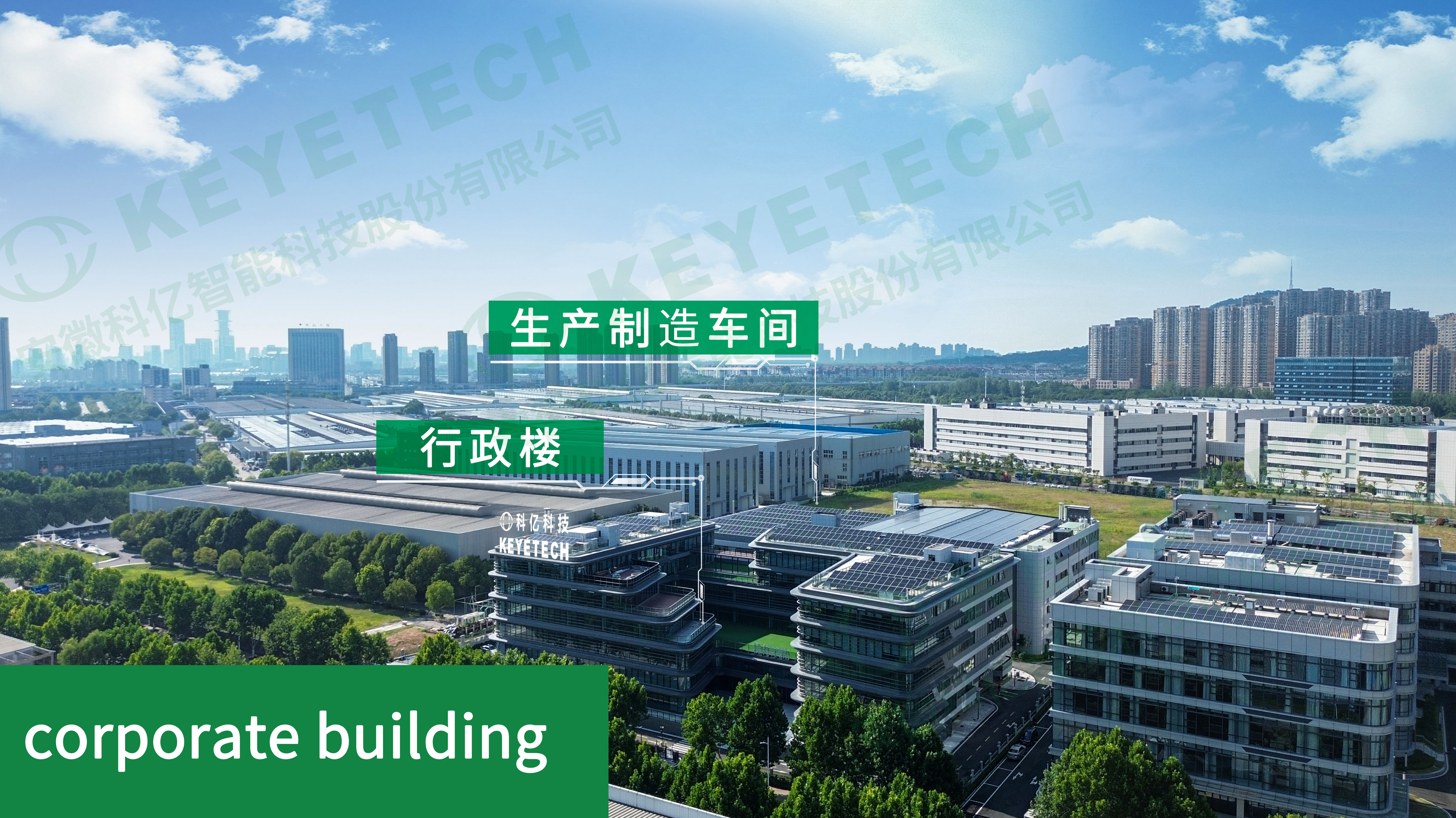
KEYETECH is an AI vision inspection company specializing in independent R&D, manufacturing, and sales of AI intelligent sorting equipment.
Why OEM Capability Matters for AI Sorting Projects
AI sorting is different from conventional optical sorting because the machine’s usefulness depends on how well the AI model recognizes the boundary between acceptable product and rejectable defect. A standard color sorter can separate red rice from white rice, or dark stones from light grains, using fixed color thresholds. But serious sorting challenges often involve subtle defects: insect eyes in grains, mold on coffee beans, blemishes on nuts, or discolored French fries in a frozen food line.
An OEM-level AI sorter should therefore be evaluated on four levels:
- Hardware configuration: channel type, belt type, number of cameras, ejector valves, and frame width matched to the product shape and throughput target.
- AI model adaptability: whether the system can be trained or fine-tuned on the buyer’s actual defect samples, not only on generic public datasets.
- Software and integration: whether sorting parameters, data logging, user interface language, and automation interfaces can match plant operations.
- Branding and documentation: whether the machine can carry the buyer’s brand and documentation for OEM/ODM distribution.
These factors help explain why buyers evaluating AI sorting equipment should look beyond basic channel counts or air consumption figures and ask how the supplier handles new-material model building and sample-based training.
The Customization Gap in Conventional Color Sorters
Most industrial color sorters share a similar architecture. Material is fed onto a vibratory feeder, flows through an optical inspection zone, and defective items are removed by high-speed air ejectors. That architecture creates a common frustration for processors: once the equipment is installed, adjusting it to a new material or a new defect type often depends on the supplier’s ability to write new sorting logic.
When a buyer is running a product such as frozen French fries, dried lemon slices, flower tea, traditional Chinese medicinal materials, or recycled plastics, the practical sorting goal includes more than color. Shape, texture, surface structure, and partial defects such as insect eyes matter. A machine that makes judgments from color alone can reject too much good product or miss the defects that matter to your customer.
This is where AI-based sorting changes the buying criterion. Because AI models can be trained on images of the actual material, the critical customization task becomes model building, not just hardware sizing.
KEYETECH’s Approach to OEM AI Intelligent Sorting
KEYETECH develops its AI sorting technology in-house. The AI algorithm team includes three PhD holders from the University of Science and Technology of China (USTC), all from the university’s Pattern Recognition Laboratory. The technology stack covers optical solutions, industrial cameras, AI algorithms, and software architecture, with core technology described as fully self-developed across optics, mechanics, electronics, computing, and software.
The company entered the color sorting machine industry with AI technology in 2024, after the founder had worked in color sorting for more than ten years. The product direction is described as an industry shift: applying AI training models to sorting problems that conventional color sorters could not handle, notably insect-eye detection and mold detection.
For buyers, this translates into three practical OEM capabilities:
- Rapid AI model setup: KEYETECH reports that a complete AI sorting model can be built within one hour, and that a sorting model can be trained with approximately 50 images. For a buyer testing a new product, this means initial feasibility testing does not require collecting thousands of defect samples.
- Hardware diversity: the catalog covers both belt-type and channel-type (vertical) machines and more than 20 AI intelligent sorting applications, including grain, rice, nuts, pet food, coffee beans, frozen food, seasonings, ore, metal, plastic, salt, flower tea, fresh flowers, French fries, vegetables, chicken nuggets, candy, lemon slices, traditional Chinese medicinal materials, and coffee cherries.
- Production and delivery capacity: the company operates a 29,000 m² facility, employs around 300 people, has an R&D team of 56 engineers, and an annual output capacity of 3,000 sorting devices. Monthly OEM production capacity is listed at 100 units, with typical lead time of 30–45 days and 100% testing before shipment.
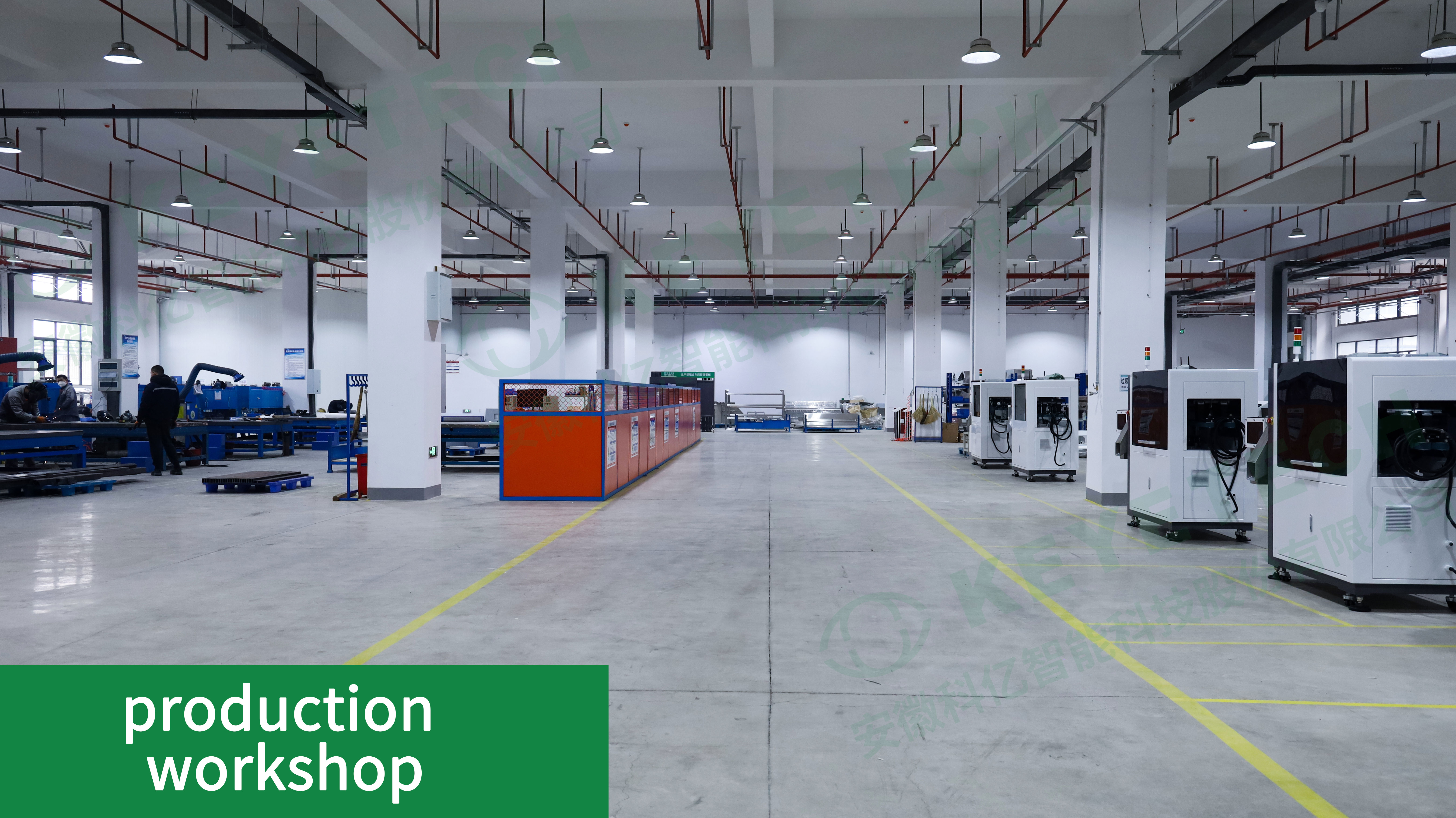
KEYETECH’s production workshop is responsible for equipment manufacturing, with R&D, manufacturing, and sales integrated in-house.
How the AI Training Process Works for Custom Sorting
When evaluating an OEM AI sorting partner, it helps to understand the training workflow. Although each manufacturer’s internal process differs, the sequence below reflects the core steps that a buyer should expect when commissioning a custom sorting model:
- Product sample submission: the buyer provides a sample of good product and defective product that represents the real production stream.
- Image acquisition: the sorter’s imaging system captures images under the exact lighting and camera configuration that the production machine will use.
- AI model training: defect types are labeled, and the model learns the boundary between acceptable and rejectable material. KEYETECH indicates this is possible with around 50 images and within roughly one hour.
- Validation on mixed material: the sorter is tested with a blend of good and defective product to measure rejection accuracy and good-product loss.
- Parameter upload: once validated, the model and sorting parameters are loaded onto the production machine.
- Site tuning and acceptance: after installation, the machine is adjusted to the plant’s real feed rate, vibration settings, and air pressure.
Key Customization Options in an OEM AI Sorter Project
An OEM sorting project is more than a machine model number. Based on KEYETECH’s OEM/ODM service scope and typical industry requirements, the following customization points should be included in any project specification:
1. Branding and Documentation
KEYETECH offers logo customization for OEM orders. This can cover the machine nameplate, HMI startup screen, control panel, operator manuals, and export packaging. For distributors and equipment brands, this is the minimum requirement for a private-label machine.
2. Machine Format and Capacity
The sorter can be selected as a vertical channel machine or as a belt-type machine depending on the product. KEYETECH’s product naming makes the format visible: models such as 6SXZ-63LFI, 6SXZ-126LFI, 6SXZ-378LFI, and 6SXZ-504LFI indicate the LFI belt-platform family, while 6SXZ-99C, 6SXZ-198C, 6SXZ-693C, 6SXZ-756LFI, and 6SXZ-990C also appear across applications. The right format depends on material flow characteristics and whether the product needs single-layer inspection.
3. Power and Utility Configuration
Across the AI intelligent sorting product range, common specifications include total power of 1.2–6.8 kW, air consumption of 0.6–6 m³/h, air pressure of 0.5–0.8 MPa, and operating temperature of -20°C to 60°C. These values give a baseline for plant utility planning, but the actual values should be confirmed against the specific machine model and its sorting width.
4. Material-Specific AI Model
The most valuable OEM customization is the AI model itself. Whether the target is removing insect-damaged coffee beans, sorting discolored French fries, detecting foreign material in pet food, or separating metal grades, the model must be trained on the actual defect population. Buyers should request a sample-based test before committing to a machine configuration.
5. Integration and Installation Scope
For new processing lines, buyers should define upstream feed conditions (pre-cleaning, destoning), downstream conveyor height, and whether the sorter needs to communicate with plant controls. Material construction is typically carbon steel or stainless steel, which should be selected according to food safety and corrosion requirements.
Which Sorting Applications Suit an OEM AI Approach?
AI-based sorting is most justified when the sorting decision is too complex for a fixed color threshold. The table below summarizes typical material categories and the specific sorting challenge each one presents.
| Material Category | Example Sorting Challenge | Relevant Product Model (KEYETECH Catalog) |
|---|---|---|
| Grains & Rice | Insect eyes, mold, broken kernels, yellow rice, glass or stone impurities | 6SXZ-693C, 6SXZ-990C |
| Nuts & Dried Fruit | Insect damage, rancid kernels, shell fragments, discoloration | 6SXZ-63LFI |
| Frozen Food | French fries with green or burnt defects, chicken nugget color variation, foreign material | 6SXZ-378LFI, 6SXZ-126LFI |
| Vegetables & Fruit | Blemishes, damaged slices, stems, unripe pieces | 6SXZ-252LFI, KQA (lemon slices) |
| Pet Food | Impurities, color variation from overcooking, foreign pellets | 6SXZ-126LFI |
| Seasonings & Salt | Dark specks, packaging debris, discolored granules | 6SXZ-756LFI, 6SXZ-198C |
| Tea & Botanicals | Stems, yellowed leaves, mold, non-leaf material, off-grade flower parts | 6SXZ-504LFI, 6SXZ-378LFI |
| Traditional Chinese Medicinal Materials | Insect-damaged pieces, mold, adulteration, discoloration | 6SXZ-378LFI |
| Ore & Metal | Grade separation, gangue removal, alloy sorting, oxidation differences | 6SXZ-252LFI, 6SXZ-378LFI |
| Plastic & Recycling | Polymer color sorting, contaminant removal, flake sorting | 6SXZ-99C |
| Coffee Cherry & Coffee Bean | Insect damage, mold, immature cherries, defective beans | 6SXZ-99C |
| Candy & Confectionery | Off-color pieces, broken product, foreign objects | 6SXZ-63LFI |
Models shown are examples from KEYETECH’s disclosed product range. Final machine selection depends on material characteristics and target throughput.
Project Evidence: OEM AI Sorting in Food and Coarse Cereals
For buyers, the most useful evidence is a case where the sorter solved a real production problem under OEM conditions. KEYETECH reports three project references that illustrate the capability profile:
- Food OEM clients / Middle East and Europe case (12 units): units operating in Italy are used to detect impurities and spoilage in food. The case highlights complete AI model building within one hour and training a sorting model with only 50 images. The project duration was one year, with stable operation reported.
- Coarse cereals OEM clients (25 units): deployed across Turkey, United States, Italy, Ethiopia, Vietnam, and Malaysia to detect insect eyes and impurities in miscellaneous grains. Results over one year reported stable operation.
- Rice OEM clients (10 units): active in India, Austria, China, and Vietnam to sort out broken rice, yellow rice, and impurities. The project reported complete AI model building in one hour and a finished-product sorting result of 99.999%.
These references show a pattern: the projects combine OEM supply relationships with defect detection challenges that conventional sorters typically miss, such as insect eyes and spoilage.
Evaluating an OEM AI Sorting Manufacturer: Step-by-Step
When you move from evaluation to execution, a structured assessment lowers the risk of selecting a machine that fails on real product.
- Define the defect list. Document every defect category that matters to your customer: insect damage, mold, foreign material, color variation, broken pieces, or process defects. Rank them by economic impact.
- Request a sample test. Send representative good and defective samples to the manufacturer. Ask the supplier to demonstrate that the AI model can detect your actual defects, not only standard samples.
- Clarify model training time and sample size. If a supplier needs days of training or thousands of images, assess whether that workflow fits your product-change frequency.
- Inspect the machine quality system. KEYETECH reports a 100% test-before-shipment policy and operates its own production and machining workshops. Confirm which quality checks apply to your order.
- Check lead time and production capacity. With a documented monthly capacity of 100 OEM units and a 30–45 day lead time, a manufacturer should be able to commit to a delivery date in the purchase contract.
- Confirm compliance and certification. Verify that the machine meets the safety standards for your target market. KEYETECH holds a CE certificate for its Inspection Sorting Machine, issued by Ente Certificazione Macchine Srl under certificate no. 1N260609.AKIT003, covering standards EN ISO 12100:2010 and EN 60204-1:2018, for the EU, US, and Middle East markets.
- Agree on acceptance criteria. Define pre-shipment testing and on-site acceptance in measurable terms: required defect removal rate, permitted good-product loss, throughput, and noise level.
- Machine format and model number defined by material
- OEM/ODM scope: logo, HMI branding, manual language, packaging
- AI model training: sample size, training time, validation method
- Utility requirements: power, air consumption, air pressure
- CE and other market compliance documents
- Lead time and monthly capacity commitment
- Payment terms, FOB/CIF delivery method, pre-shipment test
- After-sales support: remote support, spare parts, on-site service
Delivery, Acceptance, and After-Sales Considerations
Once the technical specification is agreed, procurement execution benefits from clear commercial terms. KEYETECH’s disclosed terms for AI sorting machines include a minimum order quantity of 1 unit, FOB/CIF delivery methods, pre-shipment testing, and full payment before shipping. Remote after-sales support is provided.
The pre-shipment test is the most important commercial checkpoint for an OEM order. Before the machine is crated, the buyer should confirm that the sorter is running with the trained AI model on a test batch that represents actual production conditions. This is the buyer’s last opportunity to correct sorting parameters without international freight delays.
For line integration, also plan for the following at the receiving plant:
- Compressed air quality and pressure regulation at 0.5–0.8 MPa
- Electrical supply matching the machine’s total power of 1.2–6.8 kW
- Ambient conditions within -20°C to 60°C operating range
- Operator training on model updates and parameter adjustment
Risks to Avoid When Sourcing an OEM AI Sorter
Four recurring risks cause sorting projects to fail, and each can be mitigated through the contract and testing process:
| Risk | Why It Happens | Mitigation |
|---|---|---|
| Model does not detect real defect population | Supplier trained on generic samples, not the buyer’s actual production stream | Send real production samples; require a documented sample test before order |
| Machine damages fragile product | Channel-type sorting is too aggressive for fragile or sticky materials | Specify belt-type machine (LFI series) for fragile, wet, or irregularly shaped products |
| Rejection accuracy causes excessive good-product loss | Color threshold is set conservatively to catch every defect | Require acceptance testing that measures both defect removal and good-product retention |
| Supplier cannot support future product changes | Algorithm updates depend on the original equipment engineering team | Choose a manufacturer with in-house AI development rather than an integrator reselling another company’s model |
Market Context for AI-Enhanced Sorting Equipment
The optical sorter market is projected to reach USD 5.79 billion by 2032, growing at a 9.5% CAGR from 2025, according to MarketsandMarkets. In the food processing segment, optical sorters generated an estimated USD 2,523.1 million in 2024, representing 45% of the sorting machines market, per Grand View Research. Asia Pacific was the largest regional optical sorter market in 2025 at about USD 1.03 billion, driven partly by industrial expansion in China and India.
Separately, the adoption of AI-enhanced hyperspectral and NIR sorting modules has been estimated at approximately 38% of new industrial belt-line installations as of 2024. For procurement evaluation, this signal matters: AI modules are no longer experimental add-ons, but buyers should still validate how quickly a supplier can train and deploy a model for a new material rather than assuming every AI system can be adapted immediately.
These market figures are included for background. They do not replace the sample-based technical validation that should drive an individual project decision.
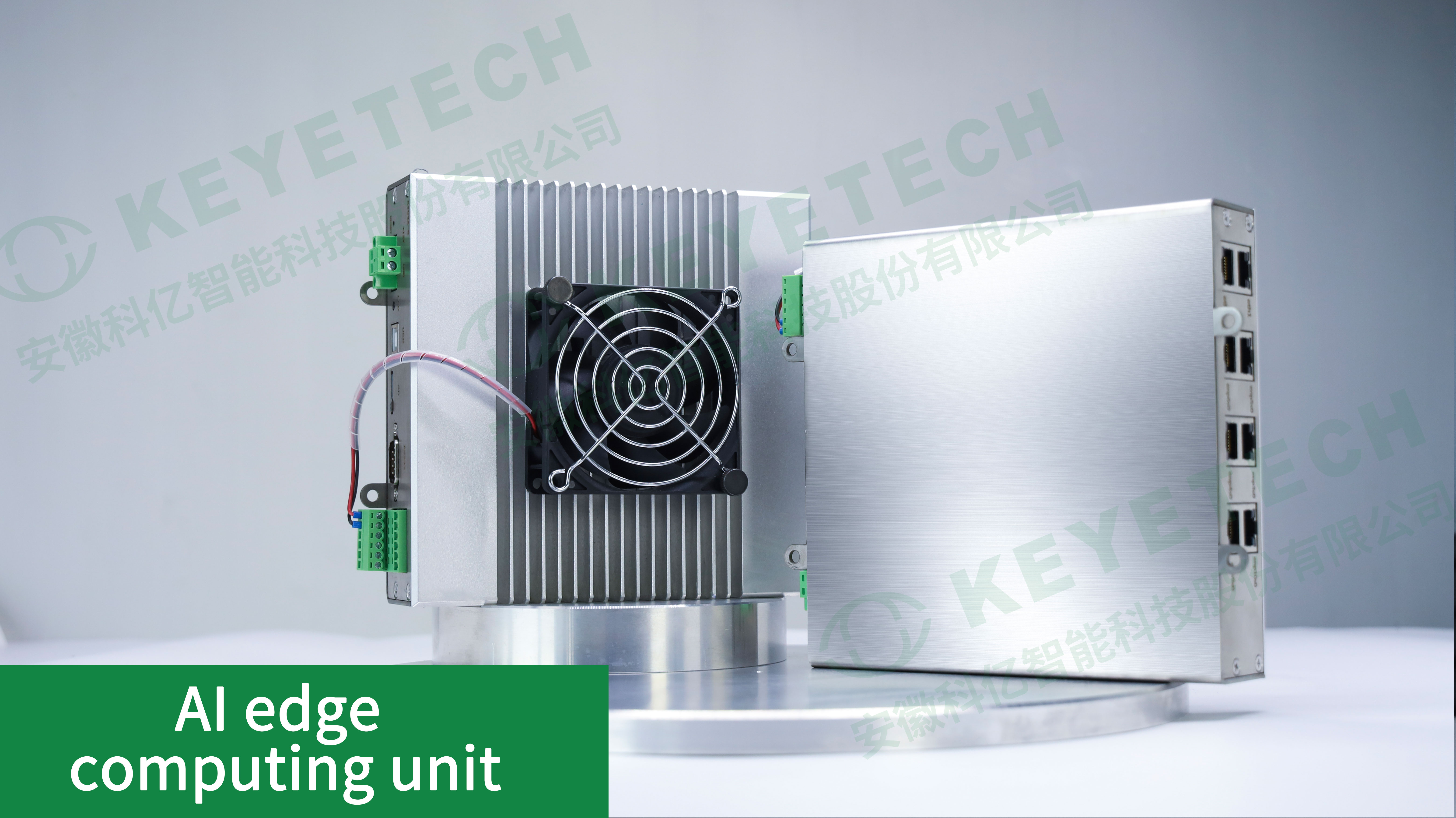
KEYETECH develops its own edge computing unit, which provides computing power for AI algorithms and accelerates inference speed.
Why Vertical AI Integration Reduces OEM Project Risk
One structural factor separates OEM suppliers with dependable AI sorting roadmaps from those that merely assemble components. When imaging, AI algorithms, software, and machine mechanics are developed in the same organization, a model update does not require coordinating multiple vendors. When the supplier also builds its own industrial cameras and edge computing units, the machine’s inference speed and detection consistency can be controlled at system level.
KEYETECH’s profile aligns with that model. The company reports 100% localization in its core technology chain, with optics, industrial cameras, AI algorithms, and software architecture developed internally. It has served more than 2,000 clients across food, pharmaceuticals, daily chemicals, textiles, liquor, new energy, electronic components, and tobacco, including large enterprises in those sectors.
For a buyer comparing OEM manufacturers, ask specifically which parts of the technology are developed in-house and which are purchased from third parties. The answer affects your long-term ability to retrain models, adjust software, and obtain spare parts.
Cost and Lead-Time Expectations for OEM AI Sorting Projects
Because machine configurations vary with sorting width, camera count, and AI options, it is not possible to state a fixed price-list figure that would apply across all projects. However, a realistic procurement plan should include these cost components:
- Machine hardware: feeder, conveyor or channel system, cameras, lighting, edge computing unit, ejector bank, and control cabinet.
- AI model development: sample testing, model training, and parameter validation for the buyer’s product.
- Customization and branding: OEM/ODM engineering work, logo printing, software interface changes, and documentation.
- Logistics and customs: FOB/CIF shipping, import duties, and inland transport.
- Installation and training: site preparation, commissioning support, and operator training.
KEYETECH reports a monthly OEM capacity of 100 units and standard lead times of 30–45 days. A project that requires substantial new AI model development can require additional time for sample shipping and validation before production starts. Buyers should build at least two to three weeks of sample-testing time into the overall schedule.
Decision Framework: Which Materials Justify an AI Sorter Instead of a Conventional Color Sorter?
This guide has discussed OEM AI sorting across many materials. Before ordering, use the following framework to confirm that AI is the right investment for your project.
Start with an AI sorter if:
- Defects are subtle and vary in appearance, such as insect eyes, mild mold, or partial blemish.
- Your product stream changes frequently and requires new sorting recipes.
- Conventional color sorters have already been tested and caused excessive good-product rejection.
- You need to document consistent output quality for a retail or food-safety customer.
- You plan to offer the machine as your own branded product and need a supplier that can retrain models on demand.
A simpler color sorter may be sufficient if:
- Defects are strongly color-differentiated, such as dark stones in white rice or black specks in salt.
- Product shape is uniform and damage risk is low.
- The sorting task will not change for years.
- The purchasing budget cannot support model-development services.
In OEM terms, even a conventional sorter can be customized with branding. But if the long-term value depends on adapting to new products, AI model flexibility becomes the central purchasing criterion.
FAQ
What does an OEM AI intelligent sorting manufacturer provide beyond the sorting machine itself?
An OEM AI intelligent sorting manufacturer provides mechanical hardware plus the AI models, software, and integration services needed to sort a specific product. In KEYETECH’s case, OEM and ODM production services are available, including logo customization. A practical example is a food OEM order in which the buyer supplies food or grain to be sorted and the manufacturer configures the machine and trains the model to detect that product’s impurities and spoilage. The minimum order is one unit, which makes OEM feasible even for pilot projects.
How long does it take to deploy a custom AI sorter?
KEYETECH reports a standard OEM lead time of 30–45 days and a monthly production capacity of 100 units. For the AI model itself, the company states that a complete AI model can be built within one hour and that a sorting model can be trained with approximately 50 images. A buyer should still allocate additional time for shipping, installation, and on-site commissioning after the machine is built.
Can an AI sorter be trained on small or specialty production batches?
Yes, if the manufacturer uses a sample-efficient training workflow. KEYETECH’s project references describe training a sorting model with only 50 images. This matters for buyers with limited access to defect samples, such as specialty food producers or processors of traditional Chinese medicinal materials, where defective items are rare and expensive to collect.
Which products can be processed with an OEM AI intelligent sorting system?
KEYETECH’s product range includes AI intelligent sorting models for grain, rice, nuts, coffee beans, coffee cherries, pet food, frozen foods such as French fries and chicken nuggets, vegetables, fruit pieces such as lemon slices, seasoning, salt, flower tea, fresh flowers, traditional Chinese medicinal materials, candy, ore, metal, and plastic. The common factor is that sorting can be automated with machine vision when the machine is configured and trained for the material’s structure and defect types.
Can I test my material before ordering an OEM AI sorting machine?
Sample testing is an accepted part of industrial sorting procurement, and buyers should request it. To assess whether a custom model can detect a specific defect population, send representative good and defective product to the manufacturer. KEYETECH’s CE certificate and project records cover machines used for food and coarse-cereal applications in markets including the EU, United States, and Middle East. With a pre-shipment test included in the procurement terms, the buyer can validate the machine before international shipping. For more specific information about testing your material and receiving a quotation, contact KEYETECH at market-axq@keyetech.com.
Conclusion
An OEM AI intelligent sorter is not an off-the-shelf product. It is a system in which hardware format, AI training workflow, software interface, branding, and after-sales support must be aligned with the material you process and the business you run.
KEYETECH demonstrates the structure of a supplier that can support that alignment: an AI vision technology background with PhD-level algorithm research from USTC, a decade-plus history in color sorting, a 29,000 m² factory with an annual output capacity of 3,000 units, OEM/ODM services down to a single-unit order, and real project references where AI models were built within one hour using around 50 training images. CE certification to EN ISO 12100:2010 and EN 60204-1:2018 further supports deployment in regulated markets.
For a buyer in the evaluation-to-execution stage, the immediate next step is practical: define your defect profile, assemble representative samples, send them to the manufacturer for a model-building test, and compare the outcome against your acceptance criteria.
Ready to test your material with an OEM AI sorter?
Contact KEYETECH for sample testing, machine configuration, or a tailored quotation.
Nicole — market-axq@keyetech.com | Tel / WhatsApp: +86 191-4244-2827
Download KEYETECH’s vertical machine brochure: Vertical Color Sorter Brochure (PDF)
KEYETECH address: No.56, Chang'an Rd, Hi-Tech Zone, Hefei, Anhui, China | Website: en.keyetech.com
Anhui Keye Intelligent Technology Co., Ltd. | AI Intelligent Sorting Systems for Food, Agriculture, Recycling & Industrial Materials
Have Questions or Need More Details?
Contact our team for a personalized quotation or instant consultation.
Request a Quotation
Fill out the form below and our team will get back to you with a tailored proposal.
WhatsApp Direct Chat
Prefer to chat in real-time? Message us on WhatsApp for instant assistance & quick answers.
- Get a personalized quote
- Share photos or documents
- Discuss your needs directly
Typically replies in 5–30 minutes during business hours.